Finally Walk Pain-Free Again
Do you have pain after twisting your ankle, or are you dealing with stubborn Achilles tendon problems? We're your specialists in Schlieren for ankle injuries of every kind.
- Recognized by all Swiss health insurers (Grundversicherung OKP and Zusatzversicherungen)
- Home visits in the Zürich area (by arrangement)

Ankle Pain: Physiotherapy for Your Ankle
When your ankle hurts, swells, or gives way when you put weight on it, even a trip to the shops becomes a challenge. It doesn't have to be that way. At PhysioWelt, we assess your symptoms thoroughly and target the treatment precisely, so you can get back to moving freely and confidently, without pain.
What Is Ankle Pain?
Ankle pain develops when ligaments, tendons, or cartilage in the joint are injured or overloaded. This heavily used joint carries your full body weight with every step, run, and jump, so it's no surprise it's among the most commonly injured joints.
The symptoms show up differently depending on the cause. After a twisting injury, swelling, bruising, and tenderness often appear within a few hours. Overuse injuries tend to come on gradually, often starting as stiffness in the morning or pain after activity, and eventually appearing during everyday activities. The most commonly affected structures include the Achilles tendon, the lateral ligaments, and the joint cartilage.
Whatever the cause, a physiotherapy assessment can identify it and guide treatment, so you can get back to walking, running, and jumping without pain.
Common Ankle Injuries and Conditions We Treat

Sports injuries are especially common at the ankle. Typical patterns include sudden pain and swelling after an ankle sprain (a ligament tear), a nagging pain in the Achilles tendon when you stretch it in the morning or after running, or a deep pressure sensation in the joint when walking downhill. These are the ankle conditions we treat most often at PhysioWelt in Schlieren:
Lateral Ankle Sprain (OSG-Distortion)/Chronic Ankle Instability
Twisting the ankle is one of the most common sports injuries. Without appropriate rehabilitation, it can lead to chronic instability, which significantly raises the risk of re-injury.
- Common causes/risk factors: Sporting overload, ankle sprain, poor footwear, weak stabilizing muscles.
- Physiotherapy treatment: Proprioceptive training, stabilization exercises, taping, manual therapy.
Achilles Tendinopathy (Achillodynia)
Pain and stiffness in the Achilles tendon, especially in the morning or after activity.
- Common causes/risk factors: Overuse from running, tight calf muscles.
- Physiotherapy treatment: Progressive strength training, calf strengthening exercises, mobilization exercises.
Foot/Ankle Fracture
A broken bone in the foot or ankle region, from an accident or a stress fracture. Requires medical assessment and subsequent rehabilitation.
- Common causes/risk factors: Trauma (fall, accident), overload (stress fracture), osteoporosis, unsuitable footwear.
- Physiotherapy treatment: Post-operative rehabilitation, mobilization, gait training, strengthening once the bone has healed.
Achilles Tendon Rupture
A complete tear of the Achilles tendon, often occurring during sport following a sudden burst of acceleration. It causes severe pain and makes it impossible to stand on tiptoes.
- Common causes/risk factors: Sudden force (such as jumping or sprinting), excess body weight, pre-existing tendon degeneration, and the use of fluoroquinolone antibiotics, a type known to weaken tendons.
- Physiotherapy treatment: Post-operative rehabilitation, gait training, calf strengthening exercises, eccentric training, progressive loading.
Peroneal Tendon Injury/Peroneal Tendinopathy
Pain and swelling along the outer side of the ankle from overload or injury of the peroneal tendons.
- Common causes/risk factors: Ankle sprain, overload, high-arched (cavus) foot, ankle instability.
- Physiotherapy treatment: Strengthening of the peroneal muscles, proprioceptive training, taping, mobilization, progressive loading.
High Ankle Sprain (Syndesmosis Injury)
Injury to the ligament complex between the shinbone and the calf bone, above the ankle. A high ankle sprain usually takes longer to heal than a typical ankle sprain.
- Common causes/risk factors: Rotational trauma, twisting of the ankle joint, contact sports, fall.
- Physiotherapy treatment: Gradual mobilization, stabilization training, proprioceptive training, swelling reduction.
Posterior Tibial Tendon Dysfunction (PTTD, or Acquired Flatfoot)
Overuse of the posterior tibial tendon, which supports the arch of the foot, causes pain on the inner side of the ankle and can gradually lead to a collapsed arch.
- Common causes/risk factors: Overuse, excess body weight, flat feet, diabetes, rheumatoid arthritis.
- Physiotherapy treatment: Strengthening of the tibialis posterior tendon, orthotic insoles, gait analysis, mobilization, eccentric training.
Ankle Impingement Syndrome (Anterior/Posterior)
Pinching of soft tissue or bone spurs in the ankle, particularly during dorsiflexion or plantarflexion (bending the foot up or pointing it down). This can cause pain when walking or running.
- Common causes/risk factors: Repeated trauma, scar tissue after injuries, bone spurs (osteophytes), hypermobility.
- Physiotherapy treatment: Joint mobilization, soft tissue therapy, strengthening of the ankle muscles, movement therapy, gait training.
Ankle Osteoarthritis (Tibiotalar Osteoarthritis)
Degenerative cartilage loss in the upper ankle joint, causing pain, stiffness, and restricted movement. It often develops after an injury or from long-term uneven strain on the joint.
- Common causes/risk factors: Post-traumatic changes (after a fracture or ligament tear), excess body weight, malalignment, degenerative changes.
- Physiotherapy treatment: Joint mobilization, pain management, strengthening of the foot muscles, gait training, orthotic insoles.
Osteochondral Lesion of the Talus (OCD)
Damage to the cartilage and the underlying bone in the ankle caused by trauma or circulation problems. It causes persistent pain and swelling.
- Common causes/risk factors: Trauma (ankle sprain), repeated micro-trauma, circulation problems, idiopathic causes.
- Physiotherapy treatment: Post-operative rehabilitation, offloading, progressive loading, strengthening exercises, proprioceptive training.
Haglund’s Deformity/Retrocalcaneal Bursitis
A bony prominence at the back of the heel bone that irritates the bursa (a fluid-filled sac that reduces friction) and the Achilles tendon. It typically flares up when wearing hard shoes.
- Common causes/risk factors: Anatomical variant (prominent heel bone), hard footwear, tight calf muscles, overpronation.
- Physiotherapy treatment: Calf stretching, heel lift, ultrasound therapy, anti-inflammatory measures, footwear advice.
Common Causes and Risk Factors
When the ankle hurts, there are usually two main causes, an acute sports injury or chronic overload. But the ankle's health also depends heavily on the foot's alignment and on the strength of the muscles that stabilize it.
The biggest risk for chronic ankle pain is a single ankle sprain that was never fully rehabilitated. This often leads to lasting instability and a high risk of re-injury.
- Acute ankle sprain (ligament tear): When the foot suddenly rolls inward, it overstretches the ligaments on the outside of the ankle. Without proper rehabilitation, the ankle can become chronically unstable and keep giving way.
- Running and jumping strain: Repetitive stress from running, jumping, or long walks can overload the tendons and ligaments, especially the Achilles tendon and the peroneal muscles.
- Malalignment (flat feet, high-arched feet, overpronation): Differences in how the foot is aligned change the way load is distributed through the ankle, putting more strain on the tendons, ligaments, and cartilage.
- Muscular weakness and instability: Weak peroneal or tibialis posterior muscles reduce the ankle's dynamic control and make injury more likely.
- Degenerative changes and past damage: Post-traumatic osteoarthritis or cartilage damage from untreated injuries are common long-term causes of ankle pain.
When to See a Physiotherapist
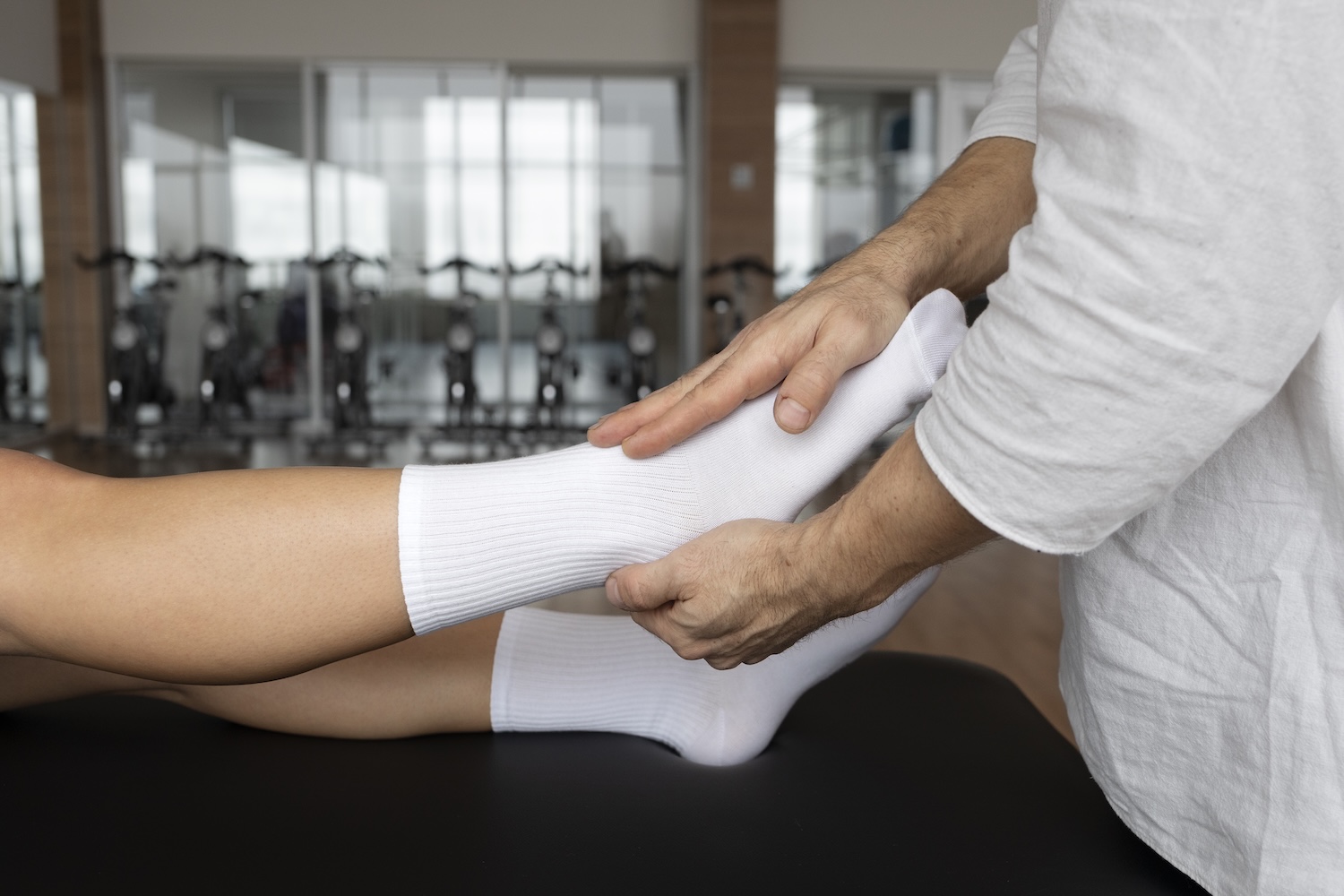
Don't ignore ankle pain that lingers. If pain in the ankle lasts longer than two to three weeks, keeps flaring up, or gets in the way of sport and everyday life, a physiotherapy assessment is the safest next step. Even seemingly minor injuries, like a twisted ankle, are worth having checked professionally, even if the ankle feels strong again quickly.
When is a doctor's visit needed? With certain acute symptoms, seeing a doctor comes first. Please see a doctor straight away if you notice any of these warning signs in the ankle:
- Severe swelling and pain after a fall or a twisting injury.
- Inability to stand or walk on the foot.
- Numbness or tingling in the foot or lower leg.
- Noticeable redness and warmth around the joint.
- A known diagnosis of osteoporosis at the time of an injury.
- Pain that persists for three to four weeks with no clear improvement.
Treatment Options
Physiotherapy for the ankle is always tailored to the individual. Which treatment comes first depends on your diagnosis, how acute it is, and your goals in everyday life. Active strengthening and proprioceptive training form the foundation for most ankle injuries.
- Manual Therapy: Targeted mobilization of the ankle, the foot joints, and surrounding structures. It improves mobility and relieves pain in osteoarthritis, impingement, and chronic stiffness.
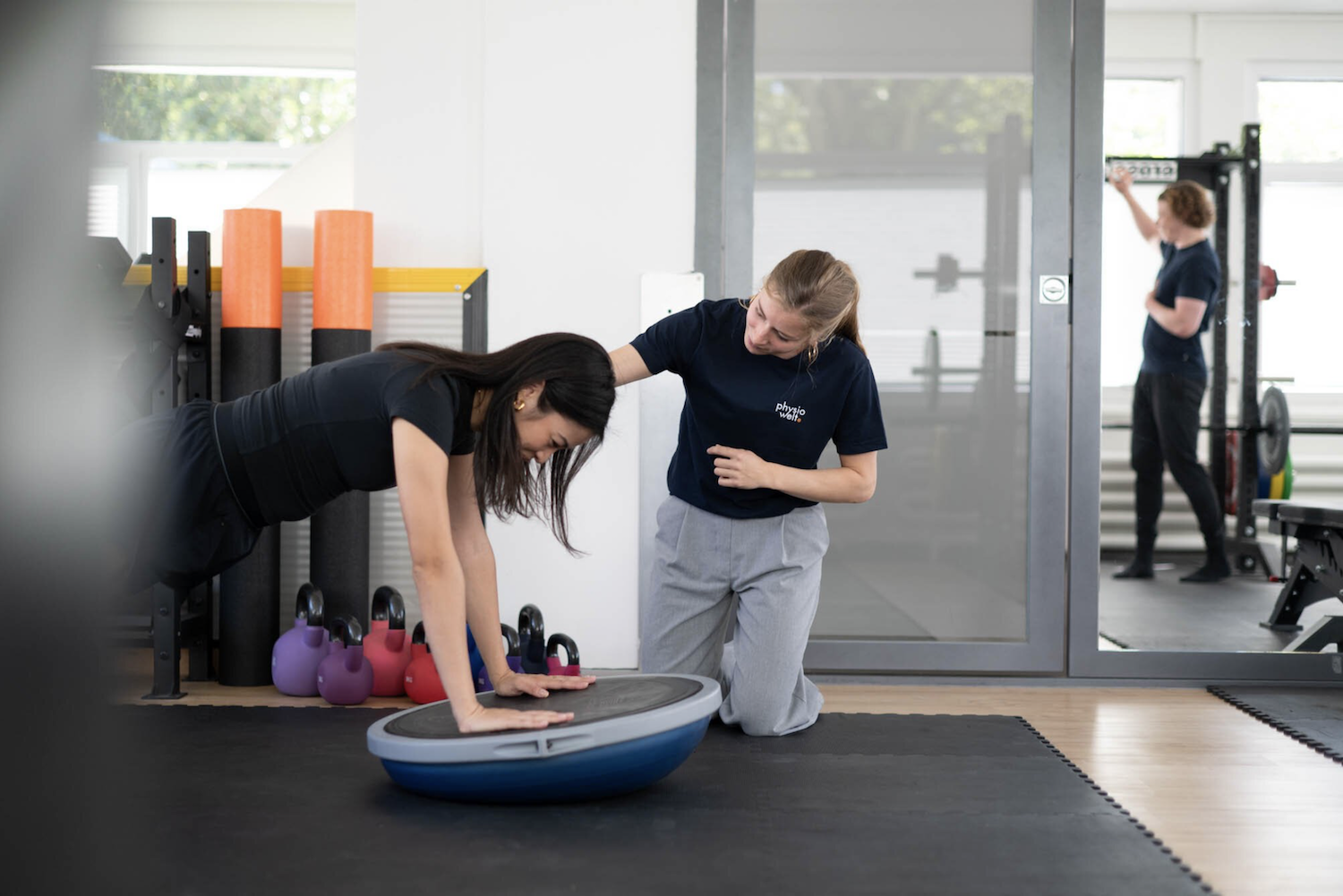
- Proprioceptive and neuromuscular training: Coordination and balance exercises to rebuild the ankle's stability after ligament injuries. This is a core part of any rehabilitation program and key to preventing re-injury.
- Medical Training Therapy (MTT): Targeted strengthening training for the calf muscles, peroneal muscles, and tibialis posterior. It forms the basis for long-term joint stability.
- Eccentric strength training: An established approach for Achilles Tendinopathy (Achillodynia) and after an Achilles tendon rupture. The controlled lowering phase supports tendon healing and reduces pain.
- Sports Physiotherapy: Structured return-to-sport programs after ligament injuries, an Achilles tendon rupture, or a syndesmosis injury. We guide your return to sport step by step, adapted to your sport and your level.
- Kinesiology Taping: Stabilizes an unstable ankle, reduces swelling, and supports your return to sport and everyday life.
- Orthotic insoles and gait analysis: For Posterior Tibial Tendon Dysfunction or ankle osteoarthritis, custom orthotic insoles complement the active therapy and take pressure off the overloaded structures.
- Post-operative rehabilitation: After Achilles tendon reconstruction, OCD surgery, or fracture care, we guide you through rebuilding load step by step, all the way back to full function in everyday life.
At your first appointment, we work out together which combination suits you best.
Reviewed by

Reviewed by: Pieter Hovenga, Physiotherapist BSc, Practice Lead at PhysioWelt Schlieren.
Areas of focus: orthopedics, manual therapy, post-operative rehabilitation, and ankle injuries. More about Pieter and the whole team on the Team page.
Last reviewed: July 2026.
Frequently Asked Questions (FAQ)
1. How long does treatment take after an ankle injury?
That depends on the diagnosis. A simple ligament injury (a lateral ankle sprain) usually heals in two to eight weeks, as long as rehab is done consistently. After an Achilles tendon rupture, we expect a recovery of three to six months, depending on the surgical protocol. At your first appointment, we'll map out the likely timeframe together.
2. Does health insurance cover physiotherapy for the ankle?
PhysioWelt is recognized by all Swiss health insurers (Grundversicherung OKP and Zusatzversicherungen). With a valid doctor’s referral (Verordnung), the treatment costs are covered under basic insurance. Without a referral, you can arrange a self-payer appointment.
3. Do I need a doctor’s referral for physiotherapy?
For coverage through basic insurance (OKP), a doctor’s referral (Verordnung) is required. For acute injuries, the treating doctor or the hospital often issues the referral directly. Without a referral, treatment as a self-payer is possible.
4. When after ankle surgery should I start physiotherapy?
The best time depends on your surgeon’s protocol. After an Achilles tendon reconstruction, rehabilitation begins in many centers as early as the first week after discharge from the hospital. For other procedures, it starts two to four weeks after the operation. Please get in touch early, and we'll help you plan the right time to start your rehabilitation.
5. Can I return to sport after a ligament tear?
In most cases, yes. A structured rehabilitation program with proprioceptive training and a clear return-to-sport protocol lowers the risk of re-injury. At each stage, we adapt the plan to how your ankle is responding and to what your sport demands.
6. What can I do between appointments to support healing?
The home program is a central part of treatment. Regular strengthening and coordination exercises at home, consistent load management, and compression if needed, all help healing between appointments. We show you the exercises that fit your diagnosis and your daily life.
Still have questions?
Contact us directly if there is anything else you would like to know.
Related Content
Other body regions:



Ready for a Stable, Pain-Free Ankle?
Whether you're recovering from a twisted ankle, dealing with chronic Achilles pain, or coming back from surgery, we assess your situation and build a clear treatment plan with you. Our Schlieren practice is easy to reach by public transport, and for acute problems, we can often see you within 24 hours.