
Get Fit Before Your Operation
PhysioWelt prepares you for your planned operation with targeted prehabilitation: build strength, improve mobility and support a faster recovery after surgery.
- Recognized by Swiss health insurers (mandatory health insurance OKP and supplementary insurance)
- Home visits in the Zürich area (home treatment by arrangement)

Preoperative Physiotherapy in Schlieren: Preparing for Your Operation
When you are facing a planned operation, you are probably already thinking about the recovery period afterward. Yet the key to a successful rehabilitation often starts before the procedure. With preoperative physiotherapy, also known as prehabilitation, you can prepare your body for the demands ahead.
Targeted strength building and mobility training reduce the muscle loss that follows surgery and noticeably shorten your recovery time. Make the most of the time before your operation and lay the foundation at PhysioWelt for your return to an active, pain-free daily life.
What Is Preoperative Physiotherapy?
Preoperative physiotherapy is a structured training and treatment program carried out in the weeks before a planned operation. The aim is to improve strength, mobility and physical conditioning so that you are better prepared for surgery and can progress more effectively through your rehabilitation afterward. The clinical term for this approach is prehabilitation.
Prehabilitation is not the same as preoperative care. Preoperative care refers to the medical and nursing support provided before and around the time of surgery. Prehabilitation, on the other hand, involves targeted physical training, including strengthening the muscles around the joint, improving mobility, gait training and learning how to move safely after surgery.
Preoperative physiotherapy is the counterpart to postoperative physiotherapy. The two approaches work together: the preoperative phase prepares your body for surgery, while the postoperative phase builds on this foundation during your recovery. As a rule, physiotherapy is covered by mandatory health insurance (OKP) when your treating doctor provides a physiotherapy referral. Self-pay treatment is also possible if you do not use the OKP route.
Who Is Preoperative Physiotherapy Suitable For?
Prehabilitation is not equally relevant for every type of surgery. It is most beneficial when the procedure is planned, and there are a few weeks to prepare beforehand. Common examples include planned knee, hip or shoulder replacement, planned spinal surgery or ACL reconstruction following a sports injury.
What these situations have in common is a clear timeframe before surgery, a doctor's referral and a defined postoperative goal that helps guide the prehabilitation plan.

Before a Knee Operation
Preoperative physiotherapy before a knee operation starts in a targeted way, before the knee joint is treated surgically. Through structured training, we strengthen the muscles around the knee and improve joint mobility. This prehabilitation approach is particularly valuable for patients who already have reduced strength, limited knee extension or an altered gait pattern before surgery.
It is ideal as preparation for a planned ACL reconstruction following a sports injury, for advanced Knee Osteoarthritis before a Total Knee Replacement (TKR) or before a meniscus repair.
The entire program, including precise load management, is tailored to your individual surgery date and the rehabilitation protocol provided by your surgeon. This helps you start your postoperative rehabilitation from the best possible position.
Before a Hip Operation
Preoperative physiotherapy before a Total Hip Replacement (THR) aims to strengthen the muscles around the hip, improve your gait pattern and prepare you for the movement precautions you will need to follow after surgery.
This form of prehabilitation is particularly suitable for patients with advanced hip osteoarthritis (Coxarthrosis) and a planned hip replacement surgery. The training can be especially valuable when severe pain has limited your ability to walk for weeks or months, leading to significant secondary loss of strength in the gluteal and thigh muscles.
Before a Shoulder Operation
Preoperative physiotherapy before shoulder surgery focuses on maintaining and improving your mobility, shoulder-blade control and the preservation of remaining strength before your operation.
This form of prehabilitation is particularly beneficial before a planned shoulder replacement for advanced shoulder osteoarthritis (Omarthrose), in cases of a massive rotator cuff tear or before tendon repair for a degenerative rotator cuff tear. Training can be especially valuable when you already have limited mobility, protective movement patterns or reduced shoulder blade stability before surgery.
Our physiotherapy treatment in Schlieren includes gentle mobility exercises within a completely pain-free range, along with targeted exercises to improve shoulder blade stability. We also gently strengthen the intact parts of your rotator cuff. We prepare you for the immobilization period after surgery and practice important exercises that you can perform independently at home during the first few weeks after your operation. This helps you enter the recovery phase safely and with the right preparation from the start.
Before a Spinal Operation
Preoperative physiotherapy before spinal surgery, whether involving the lumbar or cervical spine, prepares your core muscles, your breathing and your everyday movement patterns for the procedure ahead.
This form of prehabilitation is ideal before planned herniated disc surgery, spinal fusion (spondylodesis) of the lumbar or cervical spine or surgery to treat lumbar spinal stenosis or cervical spinal stenosis. Early preparation can be particularly valuable when long-standing back pain has already led to significant protective movement patterns and weakening of the muscles that support the spine.
At our practice, treatment focuses on strengthening the deep core muscles to provide the spine with the stability it needs. We also incorporate pain management and provide detailed guidance on important precautions and everyday activities during the first few weeks after surgery. This comprehensive preparation helps you approach your procedure with greater confidence and start your postoperative recovery as safely and effectively as possible.
Before Other Orthopedic Procedures (Ankle, Elbow, Hand and Foot)
Preoperative physiotherapy before other orthopedic procedures involving the ankle, elbow, hand or foot focuses on improving the mobility, strength and function of the affected joint or tissue and preparing you for the postoperative recovery process.
This form of prehabilitation is ideal before planned ankle surgery (such as treatment for an osteochondral lesion of the talus or ankle instability), before elbow or wrist procedures (such as elective treatment of a distal radius fracture or a Dupuytren’s operation), and before foot surgery, such as hallux valgus (bunion) correction.
Our physiotherapy treatment in Schlieren is tailored to the specific joint or tissue affected and combines targeted mobility exercises with strengthening exercises. Treatment also includes detailed guidance on postoperative weight-bearing and activity restrictions, as well as practicing the first movement patterns you will need during the early stages of recovery. This helps you approach your operation feeling confident and well prepared.
Typical Goals of Prehabilitation
Prehabilitation has clear, individualized goals that are agreed upon with your treating doctor. The plan is tailored to the procedure, your physical condition before surgery and your personal circumstances.
- Building strength before surgery: Targeted strengthening of the muscles surrounding the joint helps maintain greater strength reserves, even after a period of postoperative immobilization.
- Maintaining or improving mobility: Maximizing your active range of motion before surgery helps create a better foundation for postoperative mobilization.
- Breathing therapy and physical conditioning: Preparing your body for longer periods of bed rest, anesthesia and postoperative recovery. This is particularly relevant before major orthopedic procedures.
- Learning postoperative precautions: Weight-bearing restrictions, rotational movements and the use of walking aids and splints are practiced before surgery, rather than for the first time after you arrive on the ward.
- Mental preparation and managing expectations: A realistic understanding of the rehabilitation timeline, clear interim goals and a plan you can follow can help reduce uncertainty around the procedure.
When Should You Consult Your Doctor First?
Preoperative physiotherapy always takes place in coordination with your treating doctor. In certain situations, you should first have a medical assessment before starting physiotherapy.
Please speak with your doctor first if:
- You experience acute, unexplained pain or a sudden worsening of your symptoms before the planned procedure.
- You have uncontrolled high blood pressure or a known cardiovascular condition and have not recently discussed exercise or physiotherapy with your treating doctor.
- You have a fever, active inflammation or an infection in the area of the planned procedure.
- You have an acute thrombosis or a known blood clotting disorder and have not received medical clearance for active exercise.
- You experience unexplained dizziness, fainting or neurological symptoms.
Once you have received medical clearance, we will work with you to develop a safe and targeted program to follow until your operation date.
Our Approach to Preoperative Physiotherapy
No program at PhysioWelt starts with a one-size-fits-all template. Every treatment plan begins with a thorough assessment of your individual situation and surgical plan. From there, we develop a progressive, documented program in close coordination with your surgeon.
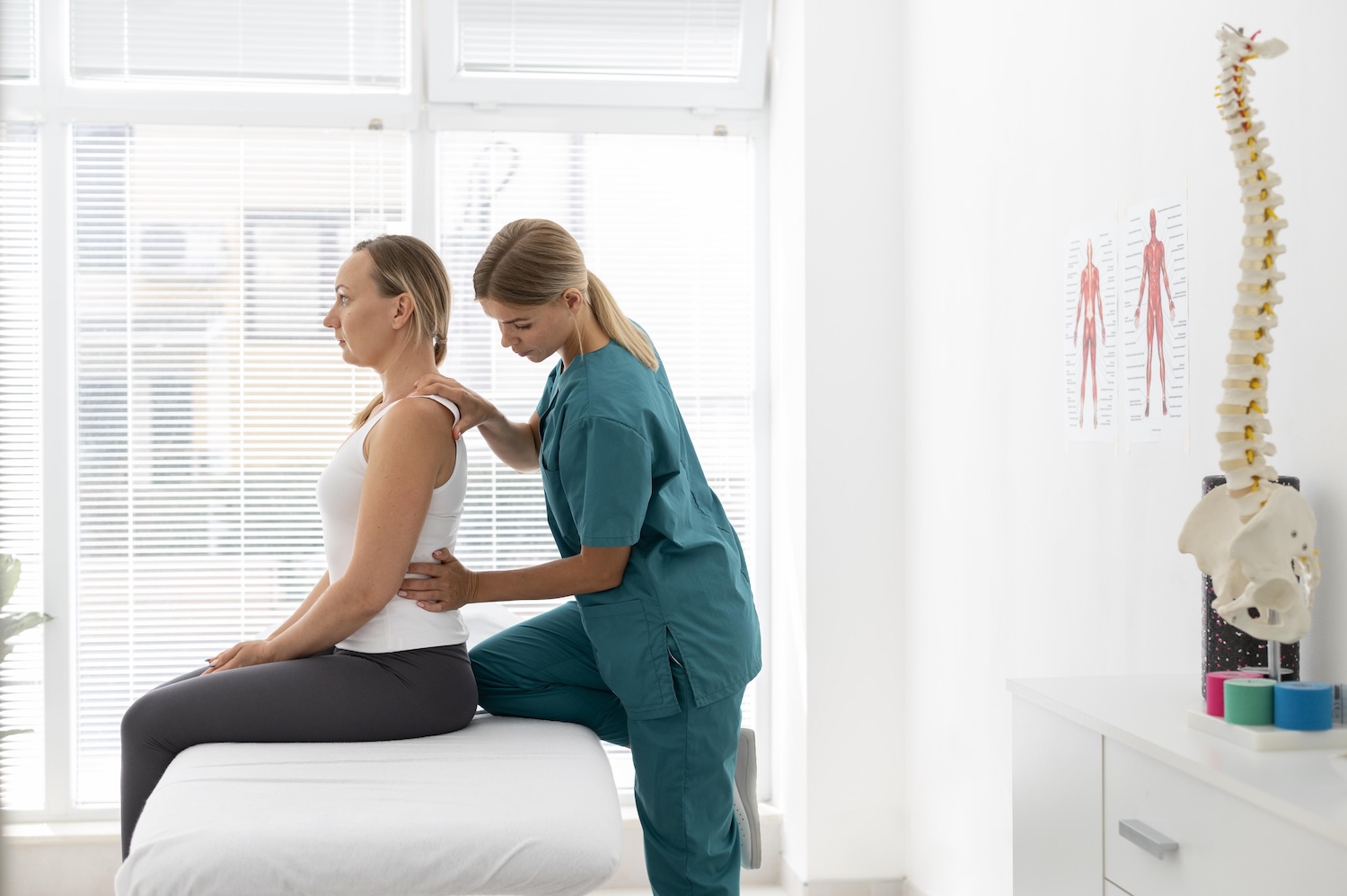
- Initial consultation and medical history: Your first appointment begins with a thorough assessment of your medical history, including the reason for surgery, your planned operation date, previous medical conditions, current symptoms and personal goals.
- Coordination with your surgeon: We align your program with your surgeon's rehabilitation protocol so that your preoperative training provides a smooth transition into postoperative rehabilitation.
- Individual training plan with Load Management: Based on your initial assessment, we create a plan with clear milestones leading up to your operation date. Training volume and intensity are increased gradually and in a controlled manner.
- Preparing for the postoperative phase: Weight-bearing restrictions, walking aids, home exercises and postoperative precautions are practiced before surgery. This means you will already know what to do and how to move safely from the day after your procedure.
Medical Responsibility

Reviewed by: Pieter Hovenga, Physiotherapist BSc, Practice Director.
Areas of focus: orthopedic physiotherapy, pre- and post-operative rehabilitation, Medical Training Therapy (MTT), Sports Physiotherapy. More about Pieter and the whole team on the Team page.
Last reviewed: July 2026.
Frequently Asked Questions (FAQ)
1. When should I start preoperative physiotherapy?
Ideally four to six weeks before the planned procedure. For larger operations such as a total knee or hip replacement, a longer lead time of eight to twelve weeks can also make sense when a clear strength deficit is already present before surgery. Once the operation date is set and medical clearance is in place, a first appointment is worthwhile so that we can align the plan with the date.
2. Does health insurance cover preoperative physiotherapy?
Preoperative physiotherapy is usually billed through basic insurance (OKP) when your treating doctor issues a physiotherapy referral (Verordnung). Some health insurers handle the preoperative phase differently. If in doubt, we recommend clarifying the referral and the planned number of sessions with your insurer in advance. A self-pay solution is possible where the OKP route is not chosen.
3. Do I need a doctor’s referral for prehabilitation?
For billing through basic insurance, yes. The doctor’s referral (Verordnung) is the basis. You can also start the training without a referral as a self-pay service. In every case, it makes sense to coordinate with your operating doctor so that the program fits the rehabilitation protocol.
4. How many prehabilitation sessions make sense before an operation?
This depends heavily on the procedure and the starting position. For a planned total knee or hip replacement, six to ten sessions in the weeks before the operation are often typical. For a cruciate ligament reconstruction in young athletes, it can be a longer, sport-specific block. In the first appointment, we give a realistic recommendation and match the number to the referral.
5. Does prehabilitation really shorten recovery time after surgery?
Studies on knee and hip replacement suggest that targeted preoperative preparation can improve postoperative mobilization and the return of strength. How clear the effect is depends on the procedure, the starting position, and the postoperative program. A specific recovery time cannot be guaranteed. The most important benefit of prehabilitation is the better starting position: stronger muscles, clearer movement patterns, and a well-practiced postoperative routine.
6. Is preoperative physiotherapy also worthwhile for a smaller or outpatient operation?
For smaller outpatient procedures such as an arthroscopy without reconstruction, a short prehabilitation is often not essential. It can be worthwhile when the affected joint is already weakened before the operation or when a protective posture has changed the movement pattern. In the first appointment, we clarify together whether a targeted preparation block adds clinical value, or whether postoperative physiotherapy is the better starting point.
Still have questions?
Contact us directly if there is anything else you would like to know.
Are You Ready to Take the First Step Toward Better Preparation Before Your Operation?
During your initial consultation, we will discuss how many physiotherapy sessions may be appropriate before your operation and how to tailor the program to your rehabilitation protocol. All you need is a scheduled operation date, a doctor's referral and a few weeks to prepare, and we can create a clear plan together.
Book your appointment with us now through our online booking tool. We are here for you in Schlieren and the surrounding area.