Personal Training in Schlieren, Guided by Physiotherapists
PhysioWelt offers 1-to-1 personal training with a physiotherapist: individually planned, clinically grounded, and without a membership.
Professional Personal Training to Reach Your Goals
Anyone who wants to train effectively needs more than standard exercises. At PhysioWelt, that means combining high-performance training with medical expertise. Here you will learn how our approach differs from a regular gym and why your health comes first with us.
What Does Personal Training at PhysioWelt Look Like?
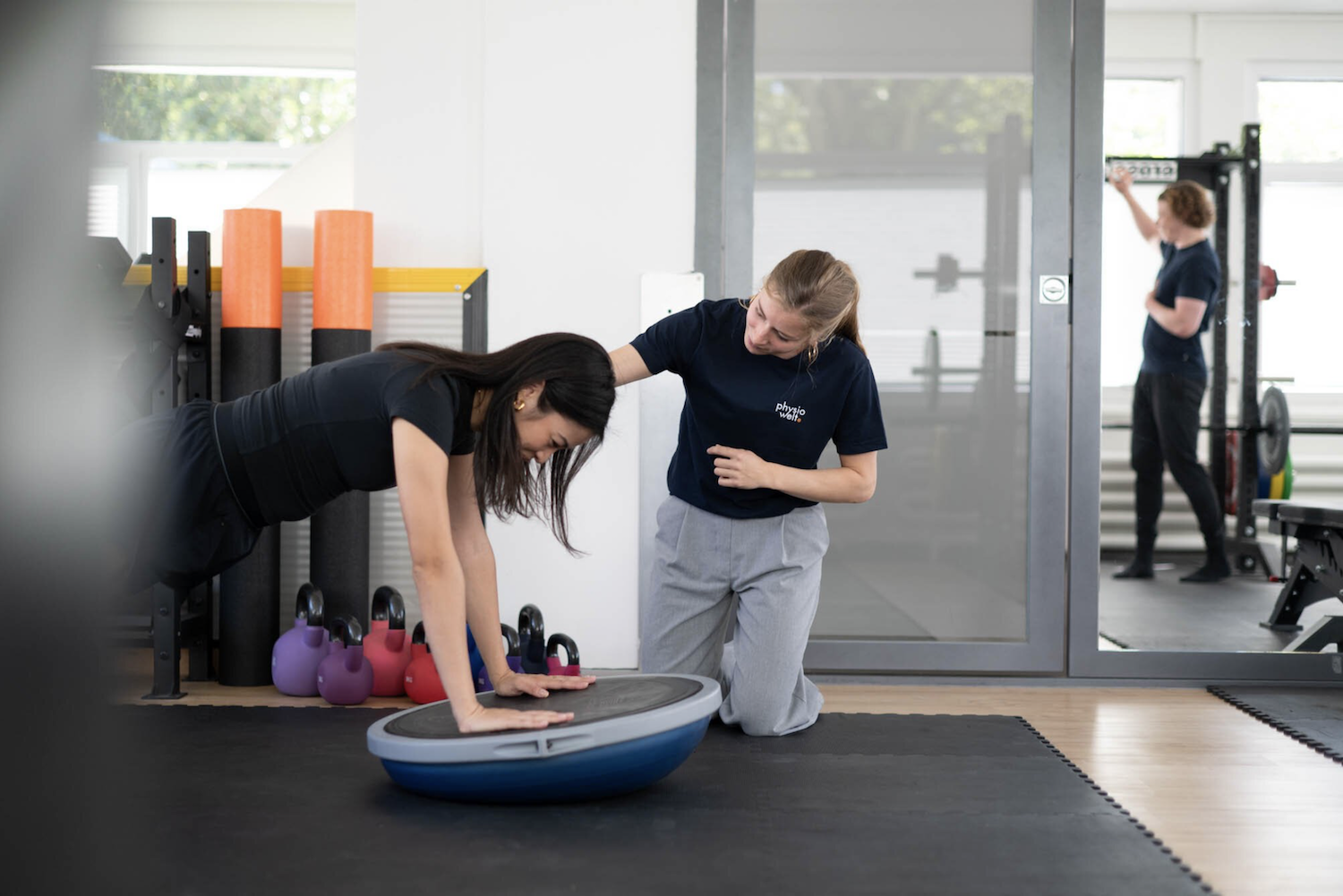
Personal training at PhysioWelt in Schlieren means a 1-to-1 session with a qualified physiotherapist. The difference from a personal trainer at a gym begins with the very first session. Instead of a general goal-setting conversation, personal training starts with a clinical assessment (Anamnese). Your injury history, movement limitations, and health factors feed directly into the training plan.
Personal training is a private service you pay for yourself, with no medical prescription (Verordnung) or health insurance approval needed.
Who Is Personal Training at PhysioWelt For?
People turn to personal training at very different stages: after finishing physiotherapy, before a planned operation, to get back to sport after an injury, or simply to train safely with a physiotherapist present. Whatever the reason, every program begins with an individual assessment.

Rehabilitation After Injury or Surgery
Personal training after an injury or surgery picks up where clinical physiotherapy ends. This training is beneficial for people after cruciate ligament (ACL) or shoulder surgery, a hip replacement (THR), or a long break from sport, who want to keep training past the acute rehabilitation stage.
Working from your rehabilitation protocol, we build a plan that adds strength, stability, and mobility step by step. With progressive load management and a clear return-to-sport focus, we guide you safely back to full strength.
Prehabilitation Before a Planned Procedure
Prehabilitation prepares your body for an upcoming procedure. In the weeks before surgery, we build strength, mobility, and conditioning, with the aim of an easier, quicker recovery afterward. This training suits people preparing for knee, hip, or shoulder surgery who want to go in stronger and limit the loss of muscle and strength that often follows an operation.
Working closely with your surgeon and your planned rehabilitation protocol, we focus on joint-specific strength and coordination so you can get back on your feet sooner.
Return to Sport After Injury
Return-to-sport training gives you a safe, staged path back to full athletic load after an injury or surgery. The training is aimed at amateur and club athletes who want to get back up to speed after a forced break and lower the risk of a setback along the way.
In physiotherapy, we use sport-specific training, load management, and movement analysis to guide the way back. The return to full training is not based on gut feeling, but on clearly defined, functional criteria.
Prevention and Long-Term Training Support
Preventive personal training is for people who have no acute injury, or who have finished their rehabilitation. Those with chronic complaints such as back or shoulder problems benefit most, as does anyone who wants safe, lasting training outside a standard gym.
The plan runs long-term and builds up progressively, with no fixed membership. Rather than a standard template, we manage your training individually and review it regularly with our physiotherapists.
Typical Training Goals
Personal training at PhysioWelt spans everything from rehabilitation aftercare to long-term strengthening. The goals differ, but the method stays the same: individual, progressive, and guided by a physiotherapist.
- Strength building after an injury or surgery: Safe, step-by-step strengthening after an injury or operation, matched to your stage of rehabilitation.
- Joint stability and injury prevention: Training the joint-stabilizing muscles to reduce the risk of re-injury, especially after ligament or tendon injuries.
- Return to sport: Sport-specific conditioning and load management for a safe return to competition or club sport.
- Back training and posture: Strengthening the core and back muscles to support the spine, suitable after back rehabilitation or with chronic complaints.
- Preventive training without an injury history: Physiotherapy-guided training for people who want to train safely and sustainably, without needing an injury to get started.
When Should You See a Doctor First?
Personal training at PhysioWelt takes place under physiotherapy supervision. Even so, in some situations we recommend a medical check before your first session.
Please speak with your doctor first if:
- You have acute, unexplained pain after an injury or surgery and do not yet have medical clearance
- You have uncontrolled high blood pressure or a known heart condition and have not checked with your cardiologist
- You have a fever, an active inflammation, or an ongoing infection
- You are recovering from a recent fracture, or post-operative treatment is not yet complete
- You experience unexplained dizziness, fainting episodes, or neurological symptoms
With a doctor's clearance, we can start to build a safe program that fits your situation.
Our Personal Training Approach
We build every program from scratch, never from a template. Each one begins with a thorough look at where you are now, then builds up step by step, documented and reviewed regularly.

- Initial consultation and assessment (Anamnese): The first session begins with a thorough assessment of your training history, injury history, current complaints, and goals. A gym personal trainer might skip this step
- Individual training plan: From that first consultation, we build a plan with clear milestones and a progressive increase in load.
- Guided by a physiotherapist: Every session is led by a physiotherapist, who adjusts your technique, load, and progression as you go.
- Progress check: We review your goals regularly and adjust the plan, so your training stays safe and effective over time.
In that first consultation, we work out whether personal training is right for your situation, and answer any questions about how it works.
Reviewed by
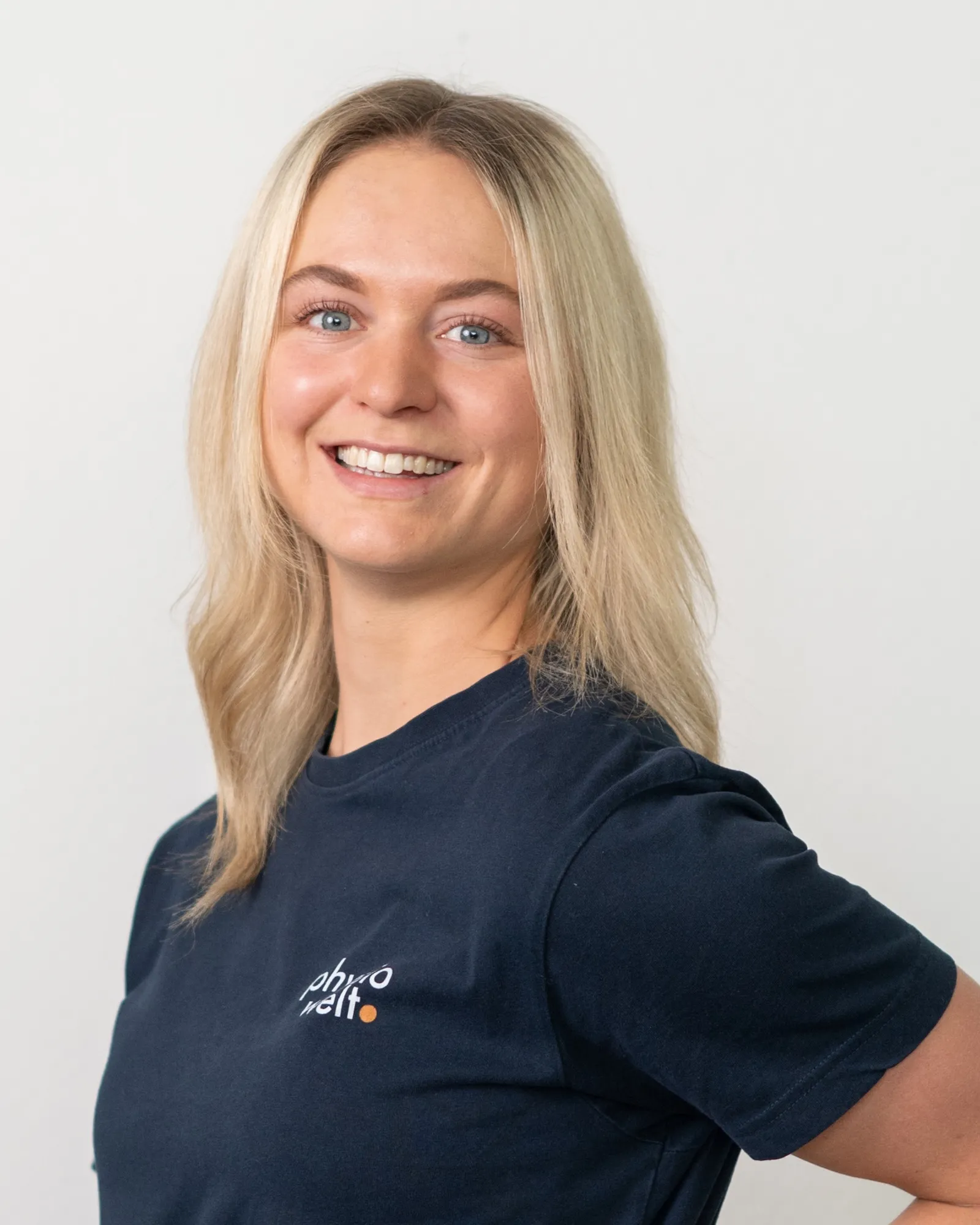
Reviewed by: Femke Hoekstra, Physiotherapist BSc, at PhysioWelt Schlieren.
Areas of focus: rehabilitation training, sports physiotherapy, orthopedic physiotherapy. More about Femke and the whole team on the Team page.
Last reviewed: July 2026.
Frequently Asked Questions (FAQ)
1. How is personal training at PhysioWelt different from a personal trainer at a gym?
Every session at PhysioWelt is led by a qualified physiotherapist, and it begins with a clinical assessment (Anamnese) covering your injury history, movement limitations, and health factors. That foundation is not standard in gym personal training, and it matters most when your starting point is complex or you have an injury history.
2. Does health insurance cover the cost of personal training?
Personal training at PhysioWelt is a private service you pay for yourself, and it is not billed through basic insurance (Grundversicherung OKP). Some supplementary insurances (Zusatzversicherungen) cover part of the cost, so it is worth checking your policy or asking us directly. If you have a medical prescription (Verordnung) and want to claim OKP benefits, Medical Training Therapy (MTT) is the better route.
3. Do I need a medical prescription for personal training?
No. Personal training at PhysioWelt needs no medical prescription (Verordnung) and can be booked directly. If you plan to train after an injury or surgery, we recommend telling your doctor first, especially after recent surgery or during ongoing medical treatment.
4. Can I start personal training right after finishing my physiotherapy?
Yes, and it is one of the most common starting points. Personal training picks up right after a completed course of physiotherapy, and your treating therapist can pass on the relevant details so nothing important from your treatment gets lost.
5. How long is a session, and how many will I need?
A session usually lasts 45 to 60 minutes. The number of sessions depends a lot on your starting point and your goal. For rehabilitation aftercare, 8 to 12 sessions are often sensible. For prevention or return-to-sport, it varies with your progress. In that first consultation, we will give you a realistic recommendation.
Still have questions?
Contact us directly if there is anything else you would like to know.
Ready to Start Personal Training at PhysioWelt?
In a first consultation, we work out together which training path fits you, whether that is personal training, MTT, or another service at PhysioWelt. No prior experience needed, and no obligation. We are here for you in Schlieren.