Hip pain in Schlieren: physiotherapy for greater freedom of movement
We offer specialized assessment and treatment for hip pain in Schlieren. Our therapy covers targeted treatment for different concerns, including hip osteoarthritis, piriformis syndrome, and femoroacetabular impingement (FAI), as well as professional rehabilitation after a total hip replacement (THR).
- Recognized by all Swiss health insurers (Grundversicherung OKP and Zusatzversicherungen)
- Home visits in Zürich (home treatment by arrangement)

Hip Pain in Schlieren: Physiotherapy for Greater Freedom of Movement
Hip pain takes the ease out of every step and weighs on daily life, from getting up in the morning to lying down at night. At our practice in Schlieren, we take the time to find out exactly what is causing your hip pain, and then build a treatment that works for you.
What is Hip Pain?
The hip joint is one of the strongest joints in the body, supporting your body weight and allowing you to move your legs. Yet it can still become painful when the muscles, tendons, or other structures around the joint are overloaded or injured.
Hip pain can feel different depending on what's causing it. It may be felt in the groin, along the outer thigh, or in the buttock, sometimes radiating down to the leg. For instance, pain that appears when walking, climbing stairs, or after prolonged sitting often suggests degenerative causes such as hip osteoarthritis.
When pain from the buttock radiates into the leg, it can point instead to irritation of the sciatic nerve, for example in piriformis syndrome. Athletes, on the other hand, tend to notice hip pain as groin pain when running or as a snapping sensation in the joint.
The causes of hip pain are varied, and include both acute muscle strains and structural changes within the joint. During the physiotherapy assessment, we will identify which area of the hip is affected and treat it in a targeted way, so you can move freely again as soon as possible.
Common Hip Injuries and Conditions We Treat
What the pain feels like, and when it flares, is often the first clue to the causes. For some, the hip snaps when walking, but others might only feel pain when running or climbing stairs. A pressing pain in the groin, soreness on the outer side of the hip, or a dull ache in the buttock each suggest that different structures may be involved.
Below are the conditions we treat at our practice in Schlieren:
1. Femoroacetabular Impingement (FAI)
A mechanical problem in the hip’s ball-and-socket joint, where changes in the bone shape cause the femoral head (the ball) and the socket to pinch painfully against each other. This can damage the ring of cartilage around the socket (the labrum) and the joint cartilage.
- Common causes/risk factors: An abnormal hip shape that is present from birth or develops during growth, intensive sport at a young age, overload.
- Physiotherapy treatment: Joint mobilization, strengthening of the hip muscles, mobility exercises, gait analysis, pain control.
2. Total Hip Replacement (THR)
Rebuilding strength and mobility after a hip replacement operation.
- Common causes/risk factors: Advanced hip osteoarthritis, failed conservative treatment, severe pain and loss of function.
- Physiotherapy treatment: Post-operative rehabilitation, gait training, strengthening of the hip muscles, rebuilding mobility, fall prevention.
3. Hip Osteoarthritis (Coxarthrosis)
Wear of the hip joint, with pain and restricted movement.
- Common causes/risk factors: Age, previous injuries, degenerative changes.
- Physiotherapy treatment: Strength training, mobilization exercises, functional training.
4. Hip Flexor Strain
Overload or injury of the hip flexor muscles.
- Common causes/risk factors: Sprinting, quick changes of direction, football or running.
- Physiotherapy treatment: Progressive load increase, mobilization, sport-specific rehabilitation.
5. Greater Trochanteric Pain Syndrome (GTPS)
Pain on the outer side of the hip, often caused by irritated tendons or inflamed bursae (fluid-filled sacs).
- Common causes/risk factors: Overload, weakness of the hip stabilizers, running load.
- Physiotherapy treatment: Load adjustment, strengthening of the hip muscles, gait training.
6. Piriformis Syndrome
Irritation of the sciatic nerve, the body's largest nerve, by the piriformis muscle, a small muscle deep in the buttock.
- Common causes/risk factors: Overload, long periods of sitting.
- Physiotherapy treatment: Stretching, strengthening, movement optimization.
7. Hip Labral Tear
A tear or degeneration of the cartilage ring (labrum) in the hip joint, with groin pain and restricted movement. Often combined with FAI.
- Common causes/risk factors: FAI, overload, hip dysplasia, repetitive rotational movements in sport.
- Physiotherapy treatment: Joint mobilization, strengthening of the hip and core muscles, movement training, post-operative rehabilitation.
8. Adductor/Groin Strain
Overstretching or partial tear of the adductor muscles in the groin region, with sudden sharp pain and tenderness on pressure. Common in ball sports and among sprinters.
- Common causes/risk factors: Sudden changes of direction, inadequate warm-up, ball sports, weakness of the adductors.
- Physiotherapy treatment: Easing the load in the acute (early) phase, physiotherapy, progressive load building, stretching and strengthening of the adductors, return to sport.
9. Snapping Hip Syndrome (Coxa saltans)
An audible or noticeable snapping in the hip joint during movement, often without pain. If symptoms persist, targeted treatment may be needed.
- Common causes/risk factors: Muscle imbalances, tight hip flexors, hip labral tear, overload from repetitive hip flexion.
- Physiotherapy treatment: Stretching of the hip flexors and the iliotibial (IT) band on the outer thigh, strengthening of the hip muscles, mobility exercises, pain control.
10. Hip Extensor Strain/Gluteal Muscle Strain
A strain or overload of the gluteal muscles, with pain in the buttock and thigh. Common after sprints, jumps, or an insufficient warm-up.
- Common causes/risk factors: Inadequate warm-up, overload, muscle imbalances, sudden acceleration or jumps.
- Physiotherapy treatment: Rest, physiotherapy, progressive load building, stretching and strengthening of the gluteal muscles.
11. Leg Length Discrepancy
A difference in leg length leads to uneven loading in the hip, knee, and back. It can be structural or functional in origin.
- Common causes/risk factors: Congenital abnormalities, previous fractures, malalignment, muscle imbalances.
- Physiotherapy treatment: Gait analysis, orthotic provision (orthopedic insoles to correct leg length), strengthening of the hip and core muscles, posture correction.
Common Causes and Risk Factors

Hip pain usually develops through a combination of factors. There is rarely a single cause, as different factors reinforce one another. Typical triggers include acute overload, hip muscles that are too weak, and a patient’s age or anatomical history.
At our practice, these are the risk factors for hip pain we see most often:
- Overload from sport and running: The repeated stress of running, sprinting, or ball sports irritates the tendons, bursae, and cartilage in the hip joint.
- Degenerative joint wear: Hip osteoarthritis and FAI develop through a combination of natural predisposition, stress from sport earlier in life, and gradually thinning cartilage. Pain when walking and climbing stairs is often the first sign.
- Muscle imbalances: Weak hip stabilizers and gluteal muscles, or tight hip flexors, place extra stress on the hip joint and tendons, which can cause pain even without a specific injury.
- Surgery and injuries: After a total hip replacement, a fall, or a fracture, the hip needs targeted rehabilitation to regain strength, mobility, and a normal gait.
- Long periods of sitting and poor posture: Sitting for work shortens the hip flexors and contributes to piriformis syndrome and functional leg length differences.
When to See a Physiotherapist
Wondering when to seek professional help for hip problems? As a rule of thumb, a physiotherapy assessment is strongly advisable if your hip pain lasts longer than two to three weeks, keeps coming back, or limits you in daily life and sport.
Important: With certain warning signs, do not wait. If you notice any of the following, please seek medical help immediately:
- Severe, sudden pain after a fall or accident (possible fracture or dislocation)
- Groin pain with a palpable bulge, or pain when coughing
- Severe swelling, redness, or warmth in the hip region
- Numbness, tingling, or signs of paralysis in the leg down to the foot
- Pain after a total hip replacement together with fever, redness, or discharge from the wound
- Hip pain in children or adolescents
Treatment Options
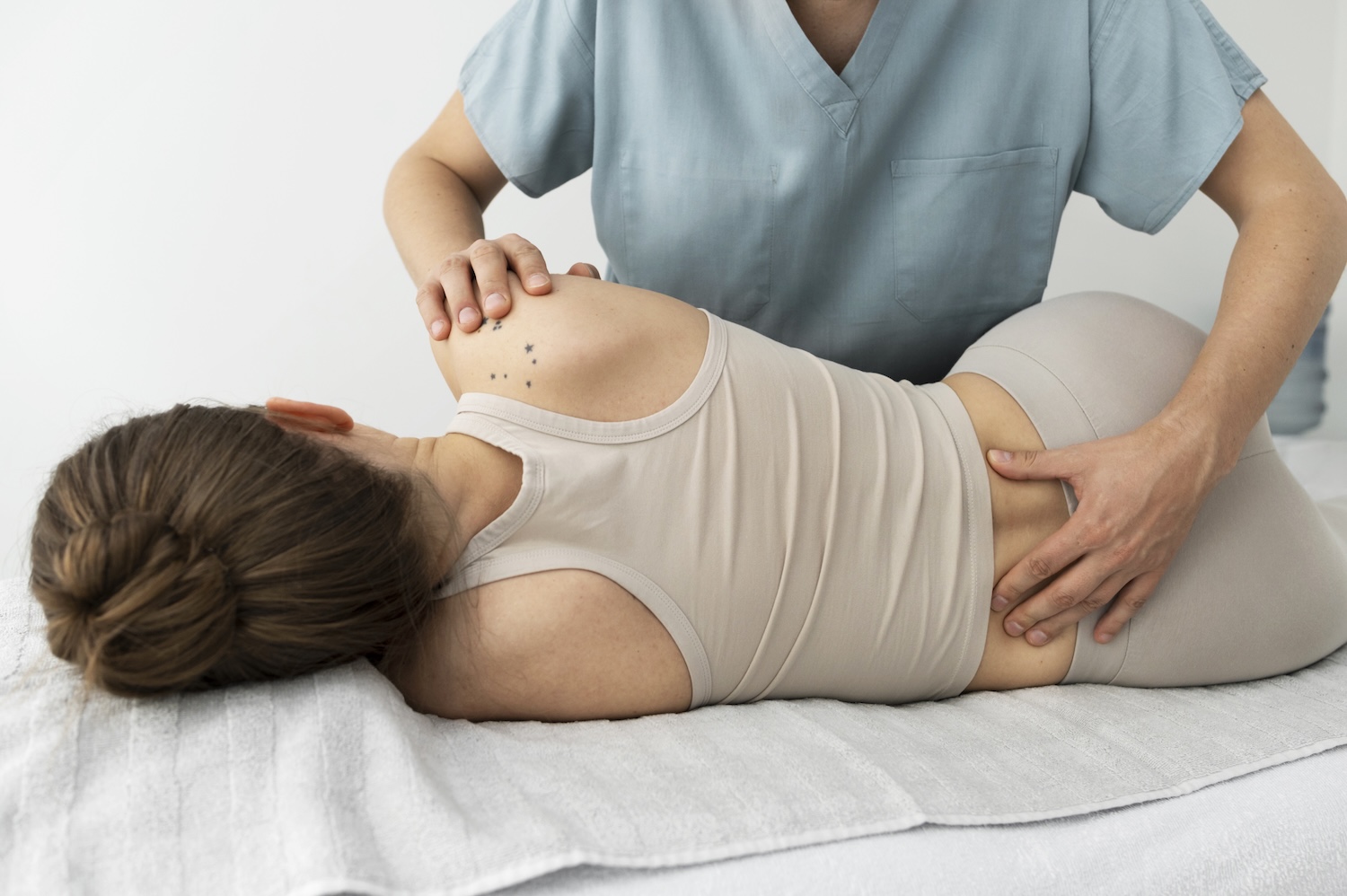
Physiotherapy for hip problems is built on several treatment approaches that are tailored to each patient. The methods we use depend on your diagnosis, current symptoms, and personal goals in daily life or sport.
For most hip conditions, treatment is built around two key pillars: strengthening the hip and core muscles through targeted exercises, and improving joint mobility with manual therapy and mobilization techniques.
- Manual Therapy: Targeted mobilization techniques to improve mobility in the hip joint and release muscle tension. Well established for hip osteoarthritis, FAI, and hip labral tear.
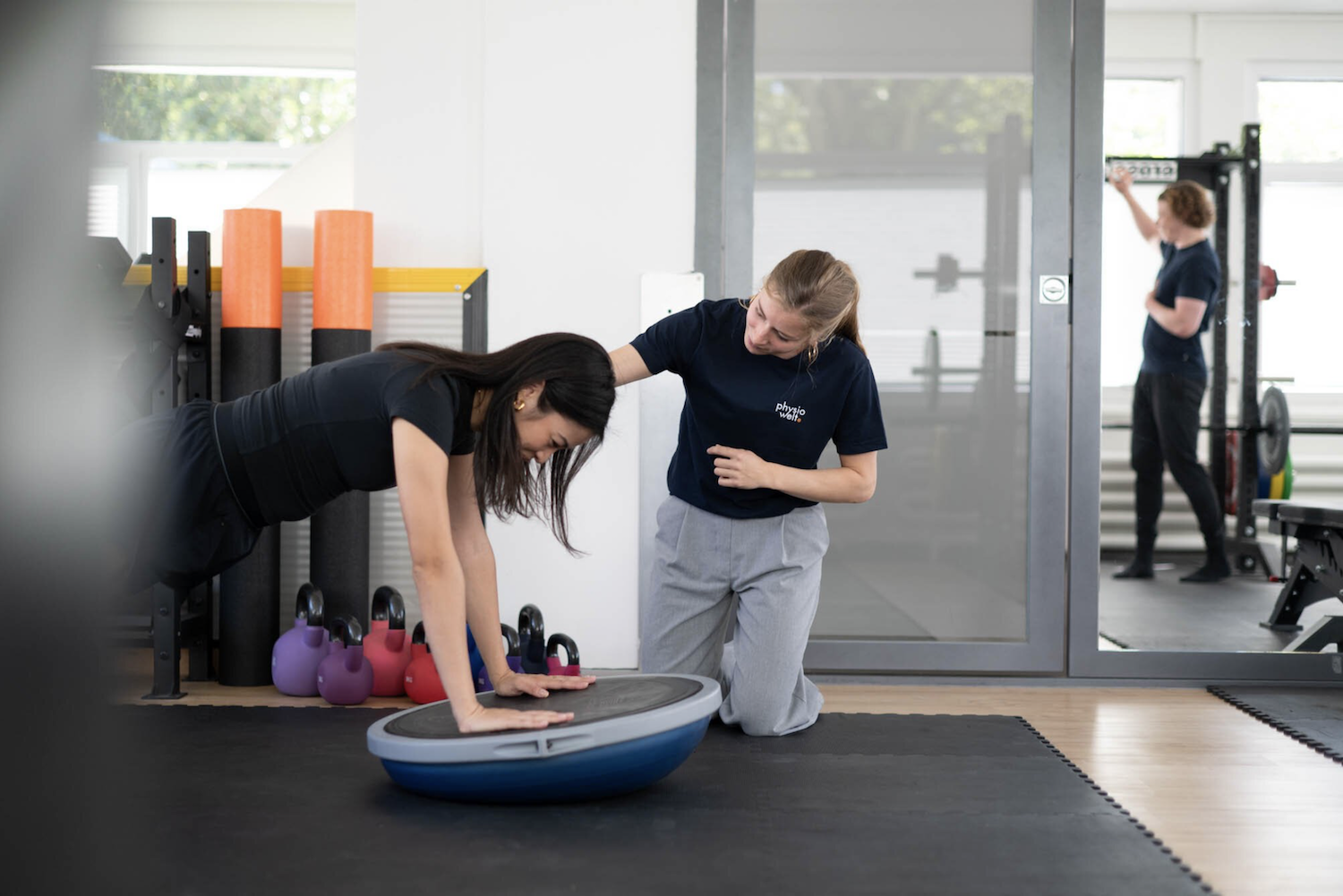
- Medical Training Therapy (MTT): A personalized strengthening program for your hip, glute, and core muscles, tailored to your needs. It's an essential part of treatment for most hip conditions, including muscle strains and recovery after surgery.
- Sports Physiotherapy: Guidance for a safe return to sport after a hip flexor strain, adductor strain, hip labral tear, or FAI, with sport-specific training and functional testing.
- Eccentric and neuromuscular training: Load management for tendon irritation (greater trochanteric pain syndrome) and proprioceptive training to improve balance, joint control, gait, and hip stability.
- Kinesiology Taping: An additional application for acute muscle strains or trochanteric pain, to support the active phase of therapy.
- Post-operative rehabilitation: Structured aftercare following a total hip replacement or labral repair, covering gait training, fall prevention, and full restoration of load-bearing capacity.
Medical Responsibility

Reviewed by: Pieter Hovenga, Physiotherapist BSc, Practice Lead at PhysioWelt Schlieren.
Areas of focus: manual therapy, orthopedic physiotherapy, and post-operative rehabilitation. More about Pieter and the whole team on the Team page.
Last reviewed: July 2026.
Frequently Asked Questions (FAQ)
1. How long does physiotherapy for hip pain take?
That depends on the diagnosis. Muscle strains such as a hip flexor strain or adductor strain usually improve within four to eight weeks. For greater trochanteric pain syndrome or piriformis syndrome, we expect six to twelve weeks of active therapy. Rehabilitation after a total hip replacement typically takes three to six months. In your first appointment, we work out a realistic timeline for your situation together.
2. Does health insurance cover physiotherapy for my hip?
Yes. PhysioWelt is recognized by all Swiss health insurers. If you have a doctor’s referral (Verordnung) for physiotherapy, the costs are covered in full through basic insurance (Grundversicherung OKP). In addition, many supplementary insurance plans (Zusatzversicherungen) cover extended therapy services. No referral? No problem: you can book an appointment as a self-payer at any time.
3. Do I need a doctor’s referral for physiotherapy?
For billing through basic insurance (Grundversicherung), a doctor’s referral (Verordnung) is required. You can obtain one from your family doctor, your orthopedic specialist, or after a hospital stay. Without a referral, a self-payer appointment is possible at any time.
4. When should physiotherapy start after a total hip replacement?
The first mobilization steps usually happen in the hospital, within the first one to three days after surgery. Outpatient physiotherapy generally begins two to six weeks after the operation, depending on the protocol of the surgical team. We coordinate the start closely with the hospital and adapt the rehabilitation to your stage of healing.
5. Can physiotherapy prevent hip surgery?
For many diagnoses, including early-stage FAI, moderate hip osteoarthritis, or piriformis syndrome, conservative physiotherapy is the first and often sufficient step. For advanced hip osteoarthritis or when conservative treatment has failed, your orthopedic specialist assesses, together with you, whether surgery is needed. We support you in both situations.
6. When can I return to sport after a hip strain?
After a hip flexor strain or adductor strain, returning to sport is usually possible after four to eight weeks, depending on the severity of the injury. We guide a structured return-to-sport build-up with progressive load increases to minimize the risk of re-injury.
7. What can I do myself between appointments?
Most progress comes from regular exercises at home. We give you a carefully dosed exercise program, matched to your stage of healing, your daily life, and your sporting goals.
Still have questions?
Contact us directly if there is anything else you would like to know.
Related Content
Other body regions:


Ready to Take the First Step Toward a Pain-Free, Mobile Hip?
At our modern practice in Schlieren, your personal goals are at the center of your treatment. With full health insurance recognition and the option of home visits, we take care of every organizational hurdle for you. Choose the easiest path to noticeable relief: book your appointment conveniently online, or call us directly.