Lasting Relief for Elbow Pain
Assessment and treatment for tennis elbow, nerve entrapment, sports injuries, and recovery after elbow surgery. For acute complaints, we can usually offer an appointment within 24 hours.
- Recognized by all Swiss health insurers (Grundversicherung OKP and Zusatzversicherungen)
- Home visits in the Zürich area (by arrangement)
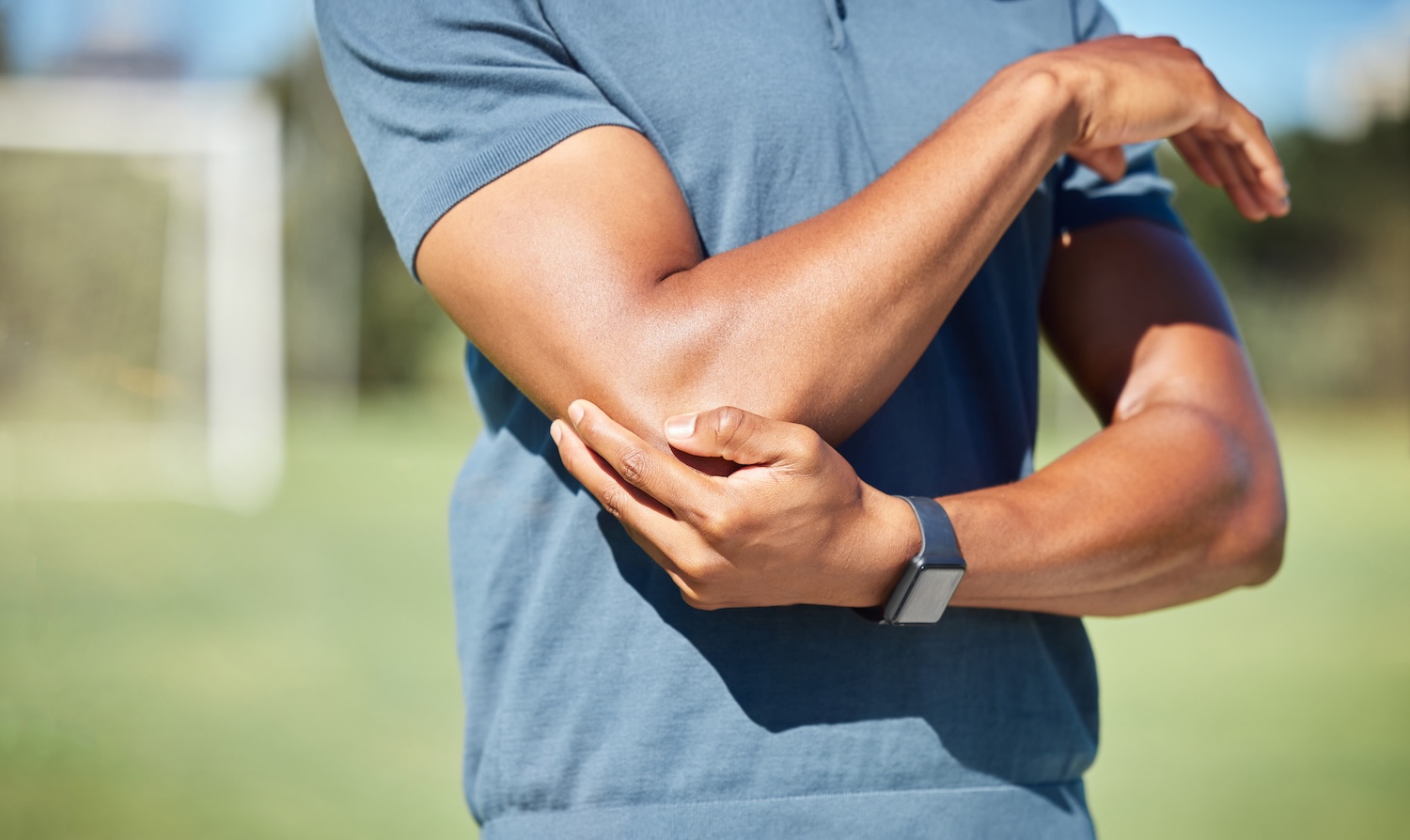
Elbow Pain: Find the Cause, Relieve the Pain
Elbow pain can severely limit how you use your hand and arm, and it often robs you of a good night's sleep, too. At our practice in Schlieren, we assess your symptoms thoroughly and target the treatment precisely, so you can get back to using your arm freely.
What Is Elbow Pain?
Elbow pain develops when tendons, nerves, bursae, or joint cartilage are irritated, overloaded, or injured. The elbow joint connects the upper arm, the radius, and the ulna, and it lets you bend, straighten, and rotate the forearm. That dual role is exactly what makes it so prone to injury, both in everyday life and in sport.
Depending on which structure is affected, the pain sits on the outer or inner side of the elbow, or it shows up as tingling in the fingers when a nerve is compressed. Many patients notice the pain when gripping, lifting, or turning the wrist. In office jobs and manual trades, you may also hear the term mouse arm (repetitive strain) for this kind of overuse pain in the forearm and elbow.
Whether it's an acute sports injury, repetitive strain, or osteoarthritis, our physiotherapy assessment pinpoints the cause so we can treat it directly, and get you back to gripping, lifting, and working without pain.
Common Elbow Injuries and Conditions We Treat
Elbow pain shows up very differently depending on the cause. A tennis elbow typically burns on the outer edge when gripping or lifting, while nerve pain such as in cubital tunnel syndrome is felt as tingling in the ring finger and little finger. Some complaints develop gradually over weeks through overload, while others appear suddenly after a fall or direct impact. Below are all eleven elbow conditions we treat at our practice in Schlieren.
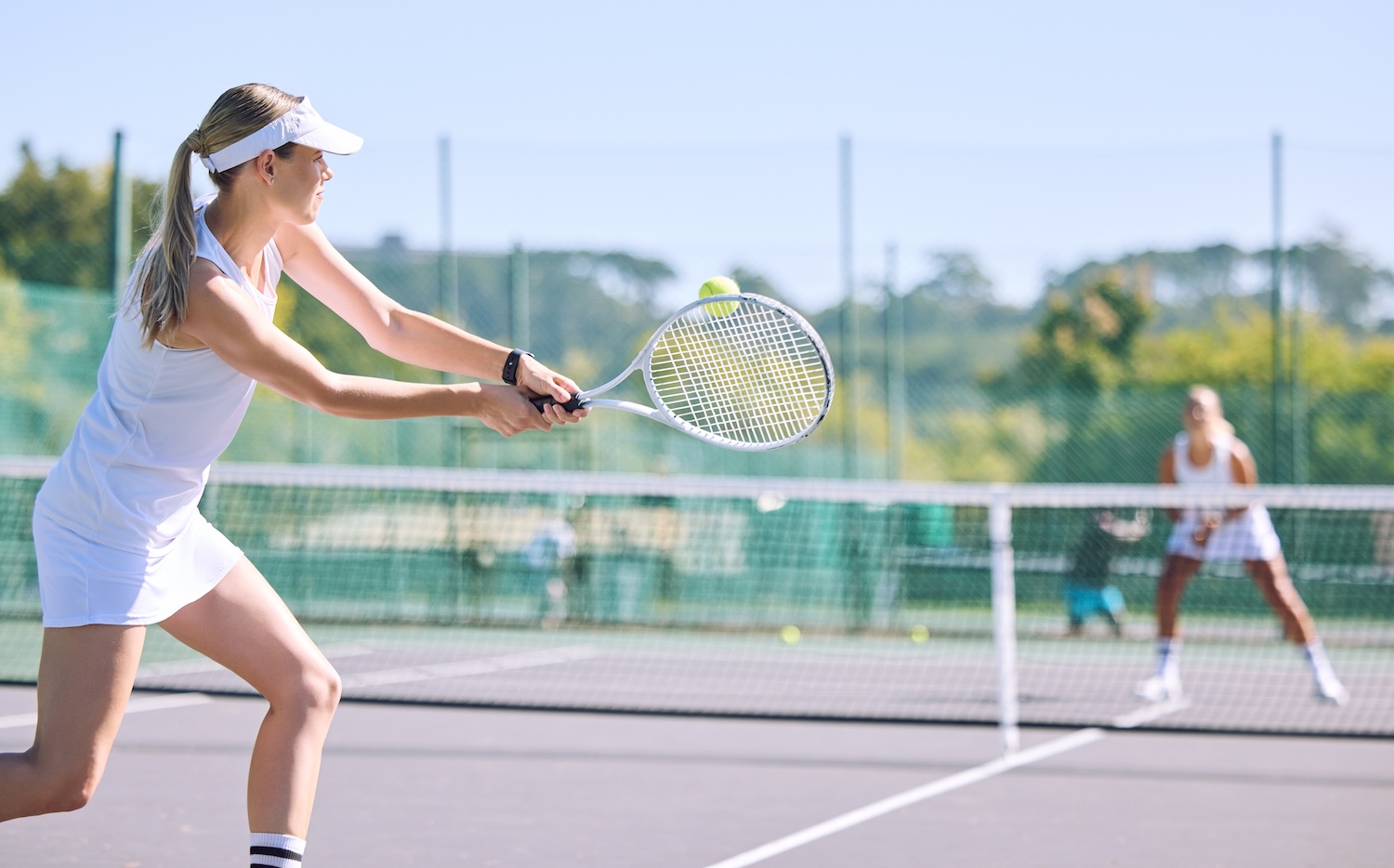
Lateral Epicondylitis (Tennis Elbow) and Medial Epicondylitis (Golfer's Elbow)
Pain on the outer or inner side of the elbow usually develops through overload of the forearm muscles. Office workers, tradespeople, and tennis players are often affected.
- Common causes/risk factors: Repetitive one-sided load (tennis, golf, office work, trades), muscle imbalances, non-ergonomic working posture.
- Physiotherapy treatment: Manual therapy, eccentric strength training, extracorporeal shockwave therapy (ESWT), ergonomic advice, taping.
Olecranon Bursitis
Inflammation of the bursa (a fluid-filled cushion that reduces friction) at the elbow.
- Common causes/risk factors: Pressure load, trauma.
- Physiotherapy treatment: Offloading, mobilization.
Cubital Tunnel Syndrome (Ulnar Nerve Compression)
Entrapment of the ulnar nerve, which runs along the inner side of the elbow and supplies the ring and little finger, causing numbness and tingling in those fingers.
- Common causes/risk factors: Prolonged leaning on the elbow, repeated bending, a non-ergonomic workstation, elbow fracture.
- Physiotherapy treatment: Ergonomic advice, nerve gliding exercises, strengthening of the forearm muscles, splint provision.
Elbow Osteoarthritis
Gradual wear of the cartilage in the elbow joint, causing pain, stiffness, and restricted movement. Common in manual jobs or after an injury.
- Common causes/risk factors: Heavy physical work, repeated overload, injury sequelae, rheumatoid arthritis, age.
- Physiotherapy treatment: Joint mobilization, pain management, strengthening exercises, mobility therapy, heat and cold therapy.
Distal Biceps Tendon Rupture
A partial or complete tear of the biceps tendon at its elbow attachment (the lower tendon attachment on the forearm bone). It causes pain and loss of strength when bending and rotating the forearm.
- Common causes/risk factors: Sudden force (lifting), degenerative pre-damage, cortisone injections, age (40 to 60 years).
- Physiotherapy treatment: Post-operative rehabilitation, mobilization of the elbow joint, progressive strength build-up of the biceps.
Elbow Dislocation (Rehabilitation After Dislocation)
Dislocation of the elbow joint with pain, swelling, and restricted movement. After the joint is reset, targeted rehabilitation is important.
- Common causes/risk factors: Fall on an outstretched arm, trauma, contact sports, ligament instability.
- Physiotherapy treatment: Step-by-step mobilization, strengthening of the joint-stabilizing muscles, coordination training, swelling reduction.
Radial Tunnel Syndrome / Pronator Teres Syndrome
Entrapment of the radial nerve (the nerve on the outer edge of the elbow that supplies the wrist extensors) in the elbow region, with pain in the forearm and weakness of the wrist extensors. It is often confused with tennis elbow.
- Common causes/risk factors: Repetitive forearm movements, non-ergonomic posture, overload, muscular tension.
- Physiotherapy treatment: Nerve gliding exercises, manual therapy, strengthening of the forearm muscles, ergonomic advice.
Elbow Fracture (Rehabilitation After an Elbow Break)
A broken bone at the elbow after a fall or direct trauma. Once it has been immobilized, and operated on if necessary, targeted physiotherapy is key to regaining full function.
- Common causes/risk factors: Fall on an outstretched arm or direct trauma, contact sport, osteoporosis.
- Physiotherapy treatment: Step-by-step mobilization, swelling reduction, strengthening, scar treatment, restoration of full mobility.
Triceps Tendon Injury / Triceps Tendinopathy
Irritation or tear of the triceps tendon at its elbow attachment, with pain when straightening the arm.
- Common causes/risk factors: Strength sport (bench press), direct trauma, repeated eccentric load, cortisone injections.
- Physiotherapy treatment: Load reduction, eccentric strength training, mobilization, progressive strength build-up.
Medial Elbow Instability (UCL Injury)
Instability of the inner elbow ligament (the UCL, or ulnar collateral ligament) with pain when throwing or during rotational movements. Common in throwing athletes (baseball, handball, javelin).
- Common causes/risk factors: Overload from throwing movements, repeated valgus stress, direct trauma.
- Physiotherapy treatment: Strengthening of the elbow flexors and extensors, throwing-mechanics review, stabilization training, progressive load increase.
Osteochondritis Dissecans of the Elbow/Panner's Disease
Cartilage and bone damage at the elbow joint, common in young athletes. It causes pain, swelling, and possible joint locking.
- Common causes/risk factors: Overload from throwing sport, gymnastics, circulation problems, young growth age.
- Physiotherapy treatment: Offloading, step-by-step load build-up, strengthening, mobility therapy, post-operative rehabilitation.
Common Causes and Risk Factors
Elbow problems rarely come from a single cause. In practice, we usually see a mix of physical strain, everyday posture habits, and personal factors such as age or previous conditions. The most common causes are:
- Repetitive, one-sided strain: Typing at a computer, screwing, hammering, or intensive racket sports put constant stress on the tendons and nerves around the elbow. Tennis elbow is the best-known example, but it affects far more than just tennis players.
- Non-ergonomic posture and work environment: Constantly leaning on the elbow, a poorly placed mouse, or missing armrests at the desk increase pressure on the structures around the joint and can lead to pinched nerves.
- Acute injuries from a fall or trauma: A fall on an outstretched arm, a direct impact in contact sport, or suddenly lifting heavy loads can damage tendons, ligaments, and bones at the elbow.
- Degenerative changes and age: With age, cartilage and tendons become less able to handle load. Conditions such as rheumatoid arthritis can speed that process up.
- Ramping up too quickly: Going back to sport or physical work too fast after a long break can overload and strain the tendons and ligaments around the elbow.
When to See a Physiotherapist
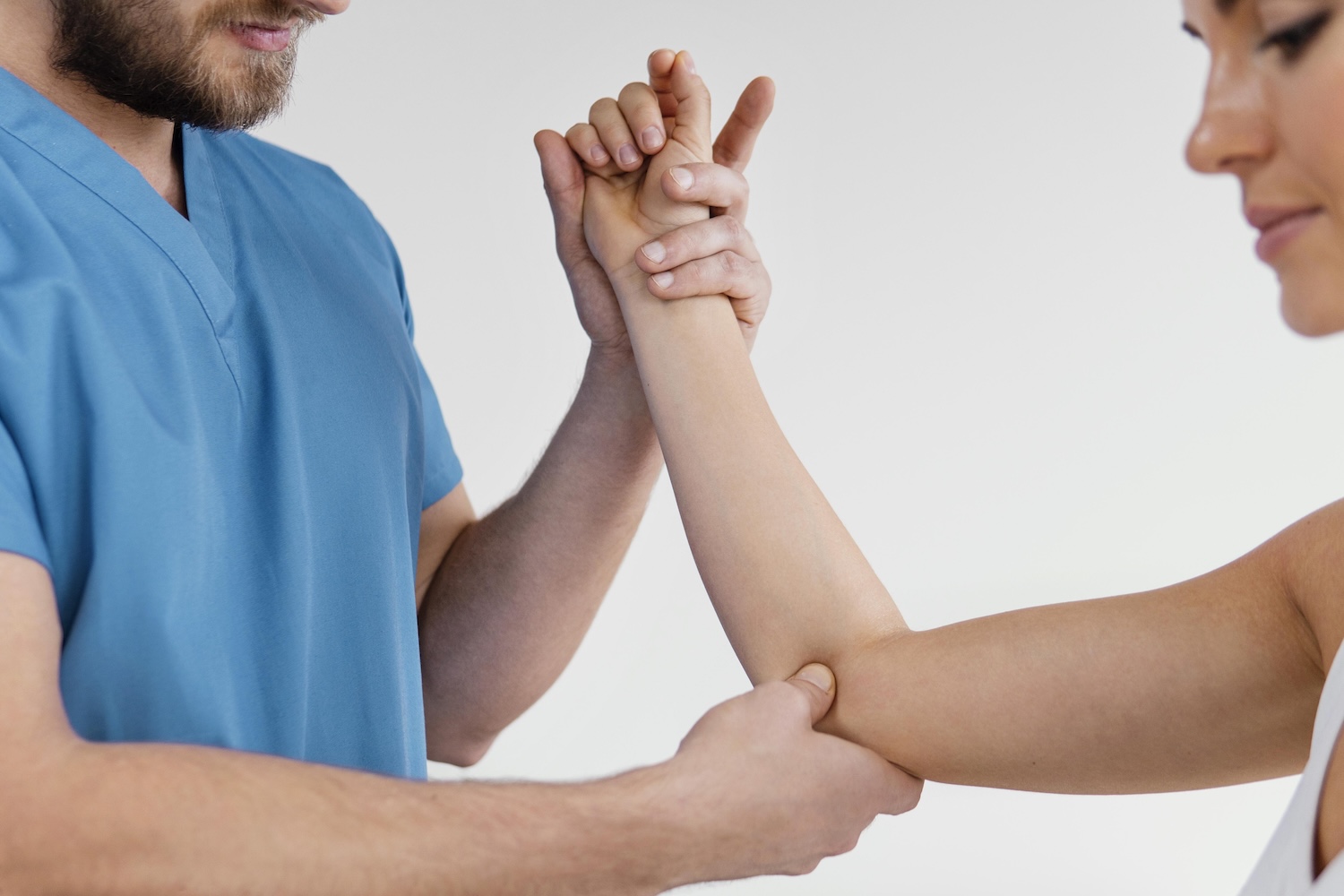
A physiotherapy assessment is a good idea if elbow pain lasts longer than two to three weeks, keeps returning, or gets in the way when you grip, lift, or play sport. It's also worth getting checked early right after an injury.
Please see a doctor first if you notice any of the following warning signs:
- Severe swelling or a visible deformity after a fall or impact.
- Sudden, complete loss of strength when bending the arm.
- Rapidly increasing numbness or weakness in the ring finger or little finger.
- Fever, redness, and a hot joint at the elbow.
- Pain that worsens at night and does not respond to rest.
- A known diagnosis of osteoporosis together with pain after a fall.
After the medical assessment, we are glad to take over the further physiotherapy treatment.
Treatment Options
Physiotherapy for the elbow combines several building blocks. Which of them fit you depends on the diagnosis, the symptoms, and your goals in daily life and sport. For most elbow diagnoses, targeted strengthening and load management are the core of treatment.
- Manual Therapy: Targeted mobilization techniques for the joint and soft tissue improve mobility and relieve pain in cases of stiffness, osteoarthritis, or after injuries.
- Medical Training Therapy (MTT): Structured strength and load build-up, dosed individually. Well established for tendinopathies, elbow osteoarthritis, and in post-operative rehabilitation.
- Sports Physiotherapy: For throwing athletes, tennis players, and patients in manual trades, the treatment program is matched to the specific movement demands, including throwing-mechanics analysis and return-to-sport planning.
- Eccentric training: Targeted muscle work performed under stretch, which reliably helps with tendon problems (tennis elbow, triceps tendon). Lengthening the muscle under load builds tendon strength.
- Nerve gliding exercises: Specific mobilization exercises for the ulnar nerve and radial nerve reduce numbness and improve nerve function in cubital tunnel and radial tunnel syndrome.
- Kinesiology Taping: A supportive measure for pain relief and load management at the elbow and forearm.
- Post-operative rehabilitation: After tendon reconstruction, fracture care, or other elbow surgery, we guide you through rebuilding strength and mobility, all the way back to full load-bearing capacity.
At your first appointment, we work out together which combination suits you best.
Reviewed by

Reviewed by: Pieter Hovenga, Physiotherapist BSc, Practice Lead at PhysioWelt Schlieren.
Areas of focus: orthopedic physiotherapy, manual therapy, and post-operative rehabilitation. More about Pieter and the whole team on the Team page.
Last reviewed: July 2026.
Frequently Asked Questions (FAQ)
1. How long does treatment for elbow pain take?
That depends on the diagnosis. An uncomplicated tennis elbow often settles within six to twelve weeks with consistent treatment. More serious injuries such as a biceps tendon rupture or an elbow fracture usually require several months of structured physiotherapy. At your first appointment, we'll map out a realistic timeline together.
2. Does health insurance cover physiotherapy for the elbow?
Yes. PhysioWelt is recognized by all Swiss health insurers (Grundversicherung OKP and Zusatzversicherungen). With a doctor's referral (Verordnung), the treatment costs are covered under basic insurance. Without a referral, you can arrange a self-payer appointment at any time or bill through supplementary insurance.
3. Do I need a doctor's referral for elbow treatment?
For billing through basic insurance (OKP), you need a doctor's referral (Verordnung). Without a referral, you can still book an appointment and cover the costs yourself or through supplementary insurance. If you have questions, we're happy to talk it through at your first visit.
4. When after elbow surgery should physiotherapy start?
The starting point depends on the type of procedure. After many elbow operations, the surgical teams recommend an early start within the first one to two weeks to avoid stiffness. We coordinate the start of therapy closely with your doctor and adapt the load to your healing progress.
5. Can physiotherapy replace elbow surgery?
Many common elbow problems can be treated conservatively, meaning without surgery. Tennis elbow, olecranon bursitis, and cubital tunnel syndrome often respond well to physiotherapy. Whether surgery is needed is something we assess together with your doctor.
6. When can I play tennis again after a tennis elbow?
Usually after eight to twelve weeks of structured treatment, once the arm is pain-free and the forearm muscles can handle load again. We guide your return to sport with a progressive build-up program, plus advice on grip strength, string tension, and stroke technique.
Still have questions?
Contact us directly if there is anything else you would like to know.
Related Content
Other body regions:

Ready to Use Your Arm Freely Again?
Whether it's tennis elbow, numbness in the fingers, or problems after elbow surgery, our team in Schlieren works with you to find out what's behind your pain and build a treatment plan that fits your everyday life. Not sure what you have? Let's talk about it.