Step by Step, Back to Moving with Ease
Assessment and treatment for heel spurs, plantar fasciitis, hallux valgus, and other foot problems in Schlieren. Appointments for acute foot pain are usually available within 24 hours.
- Recognized by all Swiss health insurers (Grundversicherung OKP and Zusatzversicherungen)
- Home visits in Zürich (by arrangement)
Foot Pain Treatment in Schlieren: Physiotherapy for Your Feet
With every step, your feet bear several times your body weight, making them one of the most heavily loaded parts of the body. Foot pain can have many different causes. During your first appointment at our practice, we assess the cause of your symptoms and determine which treatment is best suited to your needs.
What is Foot Pain?
Foot pain is discomfort that can occur in the heel, midfoot, forefoot, or toes and can originate from a number of different structures.
The arch of the foot, which is made up of the longitudinal and transverse arches, helps distribute your body weight with every step. Tendons, ligaments, bones, and the connective tissue of the plantar fascia (the band that runs along the sole from the heel bone to the base of the toes) work closely together. When one of these structures becomes irritated, overloaded, or injured, foot pain can develop.
The location of the pain can provide the first clue to its cause. A physiotherapy assessment helps identify what is causing your foot pain and provides the basis for a treatment plan tailored to your daily life.
Common Foot Injuries and Conditions We Treat
Foot pain can vary significantly depending on its cause. Heel pain that hits with the first step in the morning and eases as you start moving may be associated with plantar fasciitis or a heel spur. Burning pain inside a tight shoe can be a sign of Morton's neuroma. Achilles tendon pain after running, pain along the inner side of the foot with a progressively flattening arch, and pain around the outer ankle after repeated sprains are also common conditions we treat in our practice. Below, you will find all eleven foot conditions we treat in Schlieren.
Plantar Fasciitis/Pes Planus (Flatfoot)
Foot pain, particularly heel pain with the first steps in the morning, is often associated with plantar fasciitis.
- Common causes/risk factors: Overuse, excess body weight, improper footwear, flatfoot or a high-arched foot, and prolonged periods of standing and walking.
- Physiotherapy treatment: Stretching the plantar fascia and calf muscles, orthotic insoles, and gait analysis.
Hallux Valgus (Bunion)
A deformity of the big toe in which the toe deviates sideways.
- Common causes/risk factors: Genetic factors, foot mechanics, and footwear.
- Physiotherapy treatment: Toe exercises, orthotic insoles, footwear advice, pain management, and post-operative rehabilitation following surgery.
Metatarsalgia
Pain in the forefoot.
- Common causes/risk factors: Overuse and improper footwear.
- Physiotherapy treatment: Load management and foot exercises.
Heel Spur
A bony growth on the heel that can cause pain when walking.
- Common causes/risk factors: Overuse of the plantar fascia.
- Physiotherapy treatment: Stretching, strengthening, and gait training.
Achilles Tendinopathy (Achilles Tendinitis/Achillodynia)
Pain and stiffness in the Achilles tendon, which connects the calf muscles to the heel bone. This often affects athletes and can occur after physical activity.
- Common causes/risk factors: Overuse, increasing training volume too quickly, stiff or rigid footwear, and lower-limb malalignment.
- Physiotherapy treatment: Eccentric training, calf muscle stretching, Extracorporeal Shockwave Therapy (ESWT), running gait analysis, and orthotic insoles.
Hammer Toe/Claw Toe
Permanent bending of the toes caused by an imbalance between the muscles and tendons, often causing pain when walking.
- Common causes/risk factors: Tight footwear, hallux valgus, rheumatoid arthritis, and neurological conditions.
- Physiotherapy treatment: Toe exercises, supportive bandages, orthotic insoles, footwear advice, and conservative correction while the deformity remains flexible.
Morton's Neuroma
Burning or electric shock-like pain in the forefoot, often between the third and fourth toes. It is caused by thickening of a nerve in the metatarsal region or the forefoot.
- Common causes/risk factors: Tight footwear, high heels, splayfoot (forefoot splaying), and overuse from running.
- Physiotherapy treatment: Footwear advice, orthotic insoles, Manual Therapy, Extracorporeal Shockwave Therapy (ESWT), and offloading pads.
Tibialis Posterior Dysfunction (PTTD)
The tibialis posterior tendon helps support and stabilize the longitudinal arch. When it is affected, it can cause pain and swelling along the inner side of the foot and lead to progressive flattening of the arch.
- Common causes/risk factors: Overuse, excess body weight, flatfoot, weak foot muscles, and older age.
- Physiotherapy treatment: Foot muscle strengthening, orthoses and orthotic insoles, gait analysis, and Manual Therapy.
Peroneal Tendinopathy (Peroneal Tendon Injury)
The peroneal tendons run along the outer side of the ankle and lower leg and help stabilize the foot and ankle. When these tendons become irritated or injured, they can cause pain along the outer side of the ankle and lower leg, often after a sprain or with running activities.
- Common causes/risk factors: Ankle instability, overuse, running, high-arched foot, and repeated sprains.
- Physiotherapy treatment: Strengthening the peroneal muscles, proprioceptive training, Manual Therapy, and taping.
Stress Fracture of the Foot (Fatigue Fracture)
A stress fracture is a small crack in a bone caused by repeated stress and micro-injuries over time. In the foot, stress fractures most commonly affect the metatarsal bones and are often seen in runners, dancers, and athletes after a sudden increase in training intensity.
- Common causes/risk factors: A sudden increase in training, osteoporosis, weak foot muscles, and hard running surfaces.
- Physiotherapy treatment: Offloading, controlled progressive loading, gait analysis, foot muscle strengthening, and footwear provision.
Sesamoiditis
Inflammation or injury of the small sesamoid bones beneath the ball of the big toe, causing pain when pushing off the foot. It is common in athletes who place high loads on the forefoot.
- Common causes/risk factors: High-impact jumping, ball sports, dancing, a high-arched foot, improper footwear, and repeated impact on the forefoot.
- Physiotherapy treatment: Offloading with pads and orthotic insoles, Manual Therapy, footwear advice, and targeted strengthening of the toe muscles.
Common Causes and Risk Factors

Foot pain rarely has a single cause. In many cases, a combination of ongoing strain, an anatomical variation, and a specific trigger contributes to the problem. The following risk factors are among those we see most often in our practice.
- Overuse from sports or work: Repetitive running, jumping, or prolonged standing can place excessive stress on tendons, fascia, and bones. Runners, dancers, and people whose work involves prolonged standing are particularly affected.
- Foot deformities (flatfoot, high-arched foot, splayfoot): Deviations in foot alignment can change how pressure is distributed across the fascia, tendons, and joints, increasing the risk of various foot conditions.
- Improper footwear: Tight shoes can contribute to toe deformities and nerve irritation in the forefoot. Rigid footwear without adequate cushioning can increase stress on the Achilles tendon and plantar fascia.
- Weak foot muscles: Weak intrinsic foot muscles may not provide sufficient support for the arch of the foot. This can increase the risk of plantar fasciitis, Tibialis Posterior Dysfunction (PTTD), and stress fractures.
- Previous injuries or surgery: Previous foot surgery or untreated injuries can permanently alter foot biomechanics and may require targeted rehabilitation.
When to See a Physiotherapist
A physiotherapy assessment is recommended if foot pain lasts longer than two to three weeks, limits your ability to walk or take part in sports, or does not fully resolve after an injury.
If you experience any of the following warning signs, please consult a doctor first:
- Severe swelling or pain after a fall or twisting injury
- Inability to stand or walk on the foot
- Visible deformity or a change in the shape of the foot after an injury
- Numbness, tingling, or burning in the foot or toes without a clear cause
- Severe redness and warmth around a foot joint
- Persistent pain despite changing your footwear and taking a break from sports for more than four weeks
Once you have been medically assessed, we will be happy to provide further physiotherapy treatment.
Treatment Options
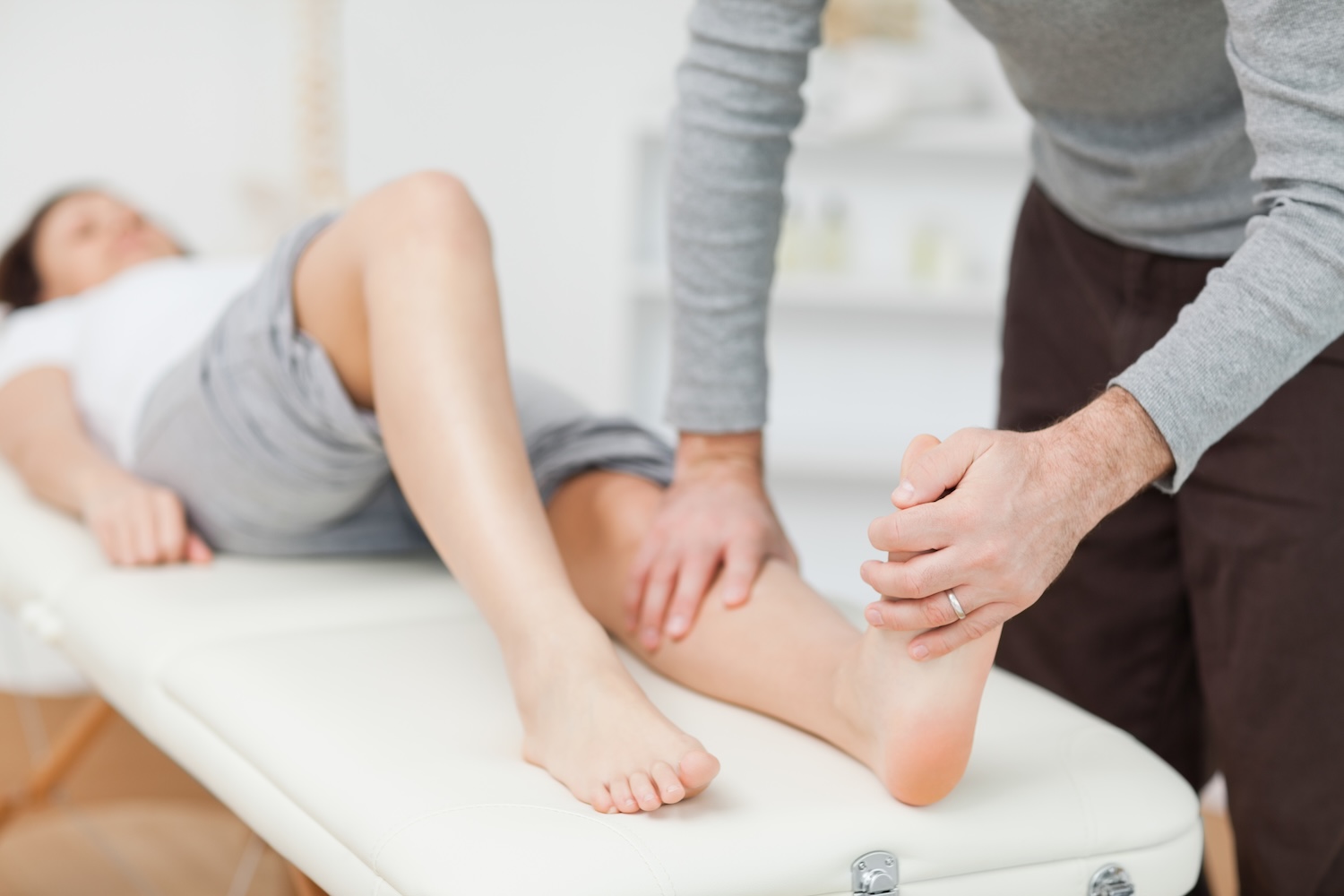
Physiotherapy for foot conditions is tailored to your diagnosis, symptoms, and goals in everyday life and sport. For most foot conditions, strengthening exercises and gait training form the core of treatment, complemented by targeted treatment for the tendons, fascia, or joints.
- Manual Therapy: Targeted mobilization of the foot, ankle joints and soft tissues, including the plantar fascia and tendons. This can be effective for restricted mobility, after surgery, and in cases of chronic foot pain.
- Foot muscle strengthening and orthotic insoles: Targeted training of the intrinsic foot muscles, which forms the basis of treatment for plantar fasciitis, Tibialis Posterior Dysfunction (PTTD), and foot arch problems. Custom orthotic insoles can complement active exercise therapy.
- Eccentric Training: Progressive loading exercises for the Achilles tendon and other tendons of the foot. An evidence-based treatment approach for Achilles Tendinopathy and tendinopathies in general.
- Extracorporeal Shockwave Therapy (ESWT): A non-invasive treatment using acoustic pressure waves. It can be effective for plantar fasciitis, heel spurs, and Achilles Tendinopathy when conservative measures alone are not sufficient.
- Sports Physiotherapy: Return-to-Sport Protocols following stress fractures, Achilles tendon conditions, and foot surgery. A gradual return to sporting activities, supported by running gait analysis.
- Gait Analysis: Identifying abnormal loading patterns during walking as a basis for orthotic insoles and correcting movement patterns.
- Kinesiology Taping: Used for heel spur, plantar fasciitis, and after injuries to help reduce stress on affected tissues and relieve pain.
- Post-operative rehabilitation: Rehabilitation following hallux valgus surgery, hammer toe correction, or treatment of a stress fracture, closely coordinated with the hospital where the surgery was performed.
We will determine which combination of treatments is right for you during your first appointment.
Reviewed by

Reviewed by: Pieter Hovenga, Physiotherapist BSc, Practice Manager at PhysioWelt Schlieren.
Areas of focus: orthopedic physiotherapy, Manual Therapy, post-operative rehabilitation. More about Pieter and the whole team on the Team page.
Last reviewed: July 2026.
Frequently Asked Questions (FAQ)
1. How long does treatment for foot pain take?
That depends on the diagnosis. Plantar fasciitis and heel spurs often show improvement within four to eight weeks with targeted physiotherapy. Chronic conditions and post-operative rehabilitation, for example after hallux valgus surgery or a stress fracture, usually take three to six months. During your first appointment, we will discuss a realistic timeline together.
2. Does Swiss health insurance cover physiotherapy for the foot?
Yes. PhysioWelt is recognized by all Swiss health insurers. With a doctor's referral (Verordnung), the costs are covered by basic insurance (Grundversicherung OKP). Without a referral, you can book privately or through your supplementary insurance (Zusatzversicherung).
3. Do I need a doctor's referral for physiotherapy?
Yes, for billing through basic insurance. After foot surgery or a sports injury, your doctor usually issues the referral directly. Without a referral, you can arrange a self-pay appointment at any time or book through your supplementary insurance.
4. When should I start physiotherapy after foot surgery?
That depends on the procedure. After hallux valgus surgery or hammer toe correction, physiotherapy usually starts within the first or second week after surgery. For more complex procedures, the timing depends on your surgeon's protocol. We coordinate the start of physiotherapy directly with your surgical team.
5. Can physiotherapy replace foot surgery?
For many conditions, particularly plantar fasciitis, heel spurs, early-stage hallux valgus, and Achilles Tendinopathy, conservative treatment is the first and often sufficient approach. Whether surgery is necessary is something we assess together with your doctor. Depending on the diagnosis, physiotherapy may help you avoid surgery, prepare you for a procedure, or support your rehabilitation afterward.
Still have questions?
Contact us directly if there is anything else you would like to know.
Related Content
Other body regions:


Are You Ready to Take the First Step Toward a Pain-Free Life?
Don't let foot pain keep you from doing the things you enjoy. Our aim is to assess your symptoms carefully and develop a treatment plan that fits your needs and daily life. If you are not sure what is causing your pain, we are here to help. Book an appointment online or get in touch with us by phone.