Foam Roller: What Really Helps, What's a Myth?
What foam rolling actually does, which myths persist, and how you can use the fascia roller effectively in training and rehabilitation.
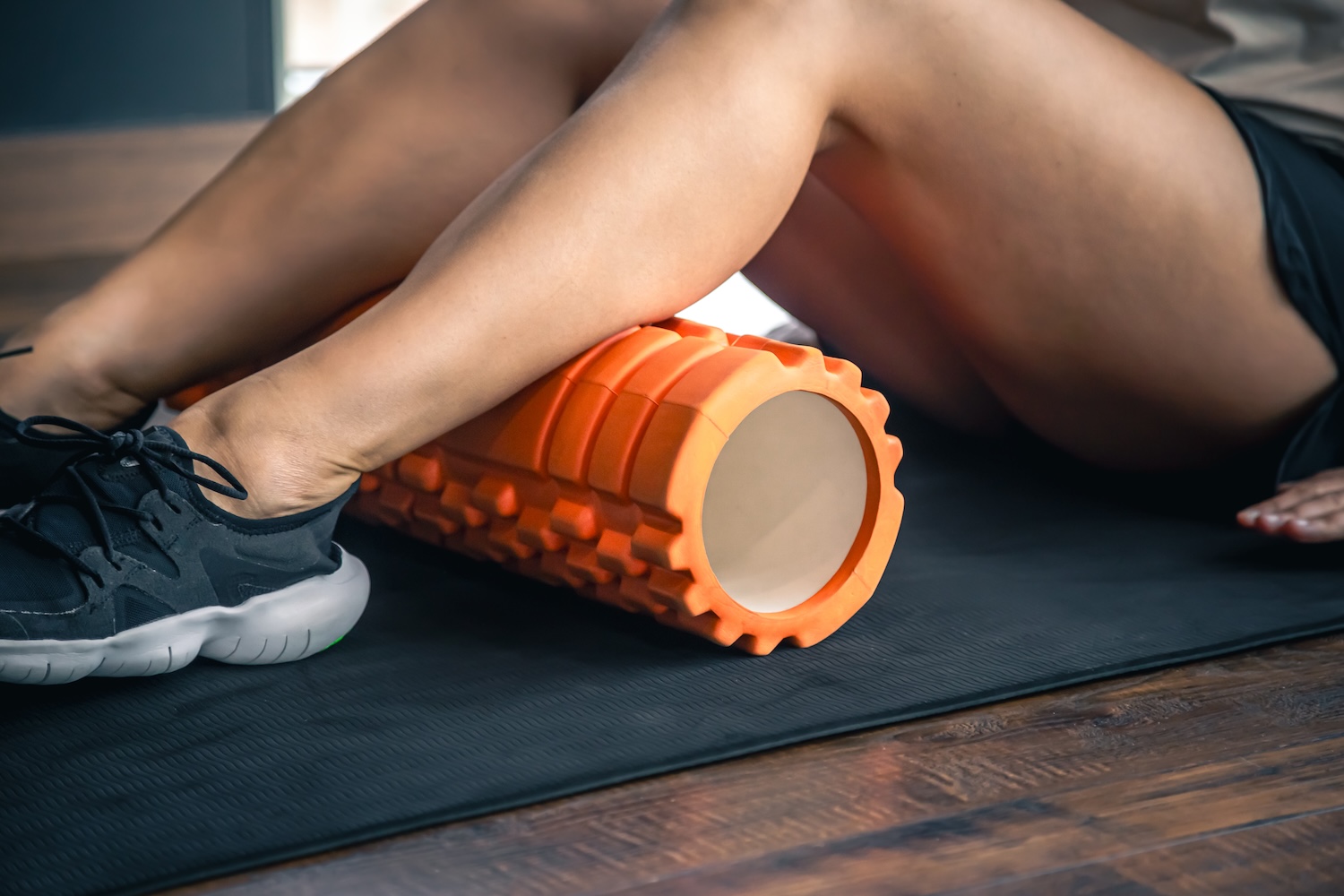
Foam rollers are now a common sight in gyms, therapy practices, and living rooms. Rolling one over the thighs, calves, or back often produces a noticeable change. The treated area feels looser, movement becomes easier, and muscle soreness eases. This experience has given rise to a number of claims that cannot be supported medically.
A foam roller can provide short-term relief from discomfort and works well alongside training. However, it will not release adhesions in the tissue, and it is no replacement for targeted strength training or for a physiotherapy assessment when pain persists.
What Is a Foam Roller?
A foam roller is a firm cylinder of foam used for self-massage. You rest a muscle group on the roller and use your own body weight to control the pressure. Depending on the exercise, you either roll slowly over the area or hold on a sensitive spot for a few seconds.

When you use a foam roller, the pressure reaches the skin, the muscles, and the fascia, the connective tissue that wraps around them. Sensory cells there, called mechanoreceptors, register it, and the nervous system can briefly change how pain and muscle tone are perceived.
Because that pressure also acts on the fascia, rolling is sometimes described as a form of fascia therapy. Even so, a foam roller stays a simple self-help tool with a limited effect.
Myth 1: The Roller "Kneads Fascia" and Releases Adhesions
Fascia is the tough, flexible connective tissue that wraps around muscles and organs and helps transmit force. Because it is so strong, the pressure from a foam roller is not enough to break it up or to physically release the deep adhesions that can form within it.
A foam roller also cannot reliably or permanently "resolve" the tender, pressure-sensitive spots often called trigger points. When an area feels looser after rolling, that comes mainly from the nervous system, which briefly changes how it reads tension and pain. The tissue itself has not been reshaped, even though it moves more freely for a while.
Myth 2: Foam Rolling Lengthens Muscles and Replaces Stretching
Static stretching holds a muscle in a lengthened position for a sustained period. Foam rolling does something different. It presses on the muscle instead of lengthening it, so it will not stretch the muscle or make it permanently longer.
After rolling, joint mobility (also called range of motion, or ROM) can improve for a short while, most likely because the nervous system briefly allows a little more movement. That short window can be useful right before training, especially when a movement feels stiff. Lasting gains come from active training instead, such as mobility work and strength building, for example, as part of medical training therapy.
Myth 3: The Roller "Flushes Out Lactic Acid"
Lactate, often called lactic acid, is a byproduct your muscles produce during hard exercise. It has long been blamed for muscle soreness, but the body clears it within about an hour of finishing, long before that soreness sets in a day or two later. Since the lactate is already gone, a foam roller has nothing to flush out.
The real cause lies elsewhere. That later soreness is known as delayed onset muscle soreness, or DOMS, the body's response to unfamiliar or especially demanding effort. Foam rolling can make it feel less intense and bring a sense of relaxation, but it works by changing how the area feels, not by moving fluid. That is also what sets it apart from manual lymphatic drainage, a separate technique that uses gentle, targeted hand movements to support the flow of lymph.
What Foam Rolling Really Does and How It Is Used in Sport and Rehabilitation
A foam roller's real benefits are more modest than the popular claims suggest, but they are genuine, and they come mainly from the nervous system rather than any lasting change in the tissue. That is enough to make it a useful tool in sport and rehabilitation, as long as it is used for the right purposes.

Because a foam roller mainly produces short-term, nervous-system effects, sports physiotherapy uses it in a targeted way, for specific purposes:
- Before training: 30 to 60 seconds per muscle group can improve mobility in the short term. An active warm-up should then follow. The roller on its own does not provide reliable injury prevention.
- After training: Gentle rolling can feel pleasant and may ease the sensation of muscle soreness. That does not necessarily mean tissue repair happens any faster.
- During rehabilitation: The roller can help gradually reintroduce pressure and movement to a sensitive area. The choice of exercise, the dosage, and the timing depend on the injury and the stage of healing.
For lower back pain, avoid rolling directly over the lumbar spine with high pressure. Exercises for the hips, trunk, and motor control are often more effective. Acute injuries, inflamed areas, fresh bruising, and sharp pain all rule out using the roller on the affected area.
The Bottom Line on Foam Rolling
The honest verdict is simple. A foam roller is a helpful extra, not a cure. Its effects are real but short-lived, and it cannot produce the lasting, structural changes that some popular claims promise.
Foam rolling works best as a supplement to active exercise, strength training, and properly dosed rehabilitation. If pain persists or keeps returning, or if symptoms such as numbness or weakness appear, the cause should be assessed by a professional. You can learn more at PhysioWelt, where you are welcome to schedule an appointment at any time.
Frequently Asked Questions (FAQ)
How often should you do foam rolling?
For general use, three to five times a week is usually enough. If it is well tolerated, daily rolling is fine as well. 30 to 60 seconds per muscle group is generally sufficient.
Does foam rolling hurt?
A clear but manageable sensation of pressure is normal. Sharp, stabbing, or electric, shock-like pain is a signal to stop. Reduce the pressure, or avoid the area altogether.
Foam rolling before or after training?
Before training, foam rolling can improve flexibility for a short time. Afterwards, it can be used to support a feeling of relaxation. In both cases, an active warm-up and proper training exercises remain the priority.
Can foam rolling release cellulite or fascial adhesions?
No. Any change the pressure makes to the fascial structure is not permanent, and it does not remove cellulite. Skin may look smoother for a short time because of the pressure, increased blood flow, and shifts in fluid.
Does foam rolling replace physiotherapy?
No. The roller can be a useful form of self-help for mild, familiar complaints. Persistent or unexplained pain needs a proper assessment and targeted treatment.
More Articles On This Topic

Ready for the First Step Toward a Healthier You?
Don’t let pain limit you any longer! Book an appointment at our physiotherapy clinic in Zurich (Schlieren) by phone or through our online booking system.