Hip Pain During or After Exercise: Causes and Treatment
Hip pain may be felt in the groin, outer hip, or buttock. Learn what the location may suggest and when treatment is recommended.

Hip pain during sport may appear in the groin, outside of the hip, or buttock. It can begin suddenly during a movement or develop gradually after training. Persistent or worsening pain should be assessed, especially when it starts limiting your movement.
The location of the pain and the activities that trigger it can provide useful clues about which part of the hip may be involved.
Where Is the Hip Pain Located?
The location of your hip pain can provide an early clue about where the problem may be coming from:
- Outside of the hip: Pain here may involve the tendons of the buttock muscles or other nearby tissues.
- Front of the hip or groin: The discomfort may come from the hip flexors, inner-thigh muscles, or the hip joint itself.
- Back of the hip or buttock: Pain in this area may be linked to the buttock muscles or lower back.
Location can narrow down the possible causes of hip pain, but it cannot confirm a diagnosis on its own. Other details, such as when the pain begins and which movements trigger it, also need to be considered.
Common Causes of Hip Pain During Sport
Hip pain during sport often starts when muscles or tendons are put under more strain than usual. This can happen after a sudden increase in training intensity or when trying an unfamiliar activity. Reduced strength or flexibility may also affect how the hip responds to repeated movement.
Not all hip pain comes from temporary muscle or tendon irritation. When symptoms persist, a more specific condition may be involved. Three common causes of hip pain during sport are:
1. Greater Trochanteric Pain Syndrome
Greater trochanteric pain syndrome, or GTPS, is a condition affecting the soft tissues around the bony area on the outer side of the hip. It commonly involves the tendons of the buttock muscles, the nearby fluid-filled bursa, or both. GTPS can cause pain and tenderness around the outer hip, thigh, or buttock, especially when lying on the affected side or climbing stairs.
GTPS is sometimes called trochanteric bursitis. However, the bursa is not the only structure that may be involved. The term greater trochanteric pain syndrome covers this broader pattern of outer hip pain.
2. Femoroacetabular Impingement
Femoroacetabular impingement, or FAI, is a condition in which the shape of the upper thigh bone, hip socket, or both creates extra contact inside the joint. This contact can pinch or rub against the labrum and cartilage. It may cause groin pain when the hip bends deeply and turns inward, such as during squatting, pivoting, or changing direction.
Over time, repeated contact may damage the labrum, the ring of cartilage around the hip socket. Pain during one movement is not enough to confirm FAI. A diagnosis is based on the symptoms, a physical examination, and imaging findings.
3. Hip Osteoarthritis
Hip osteoarthritis is a condition in which the cartilage and other structures within the hip joint gradually change. These changes can cause pain, stiffness, and reduced movement. The hip may feel stiff for a short time after resting or when you first get up in the morning. Pain is often more noticeable during activities such as walking, climbing stairs, or exercising.
The condition is more common in middle-aged and older adults. Regular exercise adapted to the person’s symptoms and abilities can help reduce pain and maintain everyday function.
What Should You Do When Hip Pain Begins?
When hip pain begins, reduce or pause the activity that clearly makes it worse. Give the painful area time to settle while staying active with movements that remain comfortable. Short walks or gentle cycling may be suitable if they do not increase the pain during or after the activity.
Heat or cold may provide temporary relief and make the hip more comfortable. Since these measures only manage the symptoms, continue to monitor how the pain changes. Pay attention if the pain keeps coming back, increases after activity, or remains worse the following day.
When Should You Seek Medical Help?
Seek prompt medical attention if the hip pain is sudden or severe. You should also get help if you cannot put weight on the affected leg. A hot, swollen hip accompanied by a fever also requires medical assessment.
Deep groin pain that becomes worse while walking should be checked as well. In some cases, this can indicate a stress fracture near the top of the thigh bone. Stop running and avoid activities that place pressure through the affected leg until the cause has been assessed.
How Physiotherapy Can Help with Hip Pain
Physiotherapy can help identify which physical factors and training habits may be contributing to your hip pain. During the assessment, your physiotherapist will examine your hip movement, muscle strength, walking pattern, and the activities that trigger your symptoms.
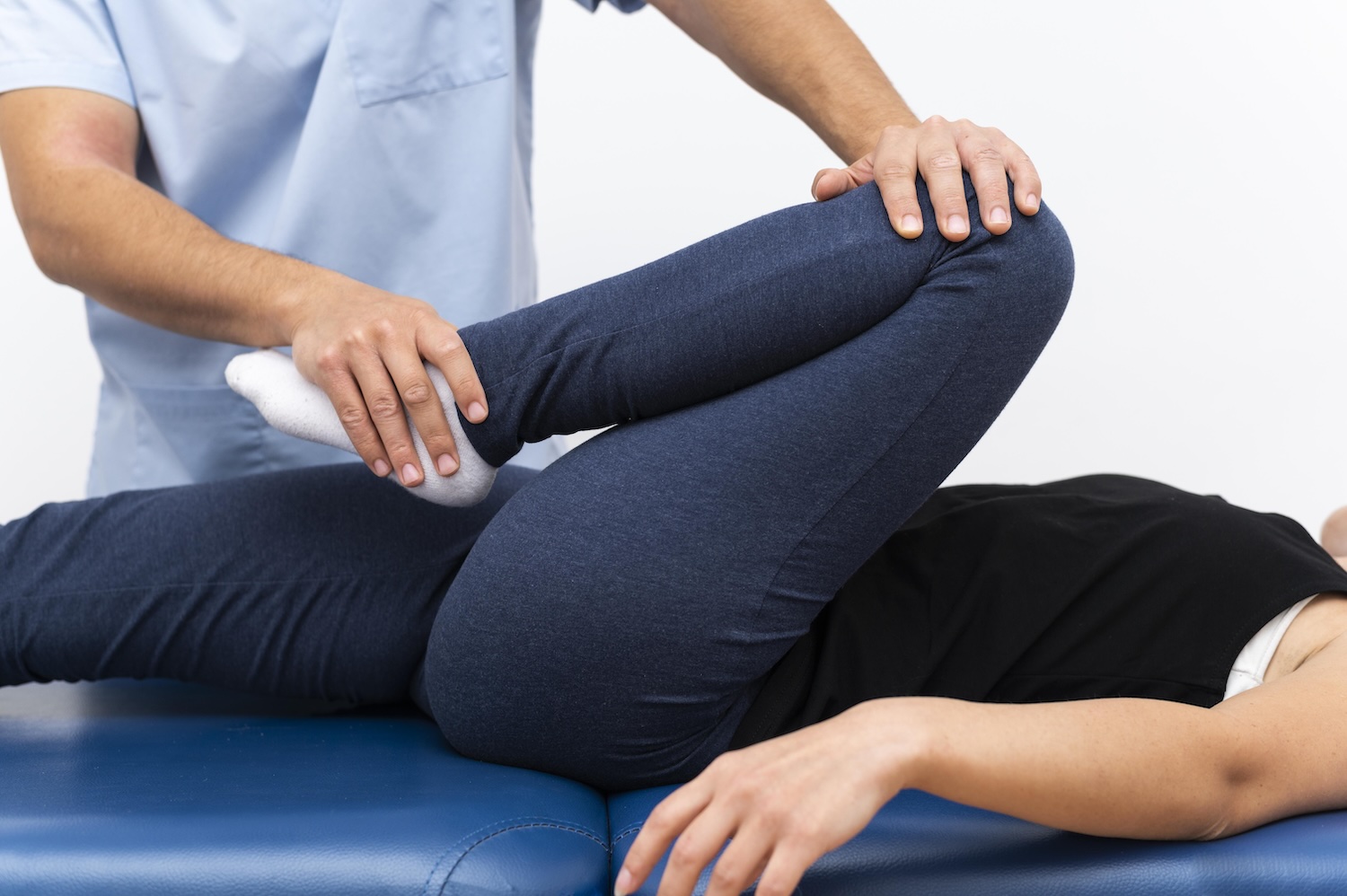
Based on these findings, treatment is adapted to your symptoms and sporting goals. Active rehabilitation usually forms the main part of the plan, particularly when you need to rebuild strength and return to training.
In this case, sports physiotherapy may include guided exercises and adjustments to movements that currently cause pain. If restricted joint movement is also contributing to your symptoms, manual therapy may be added as a supporting treatment.
Building Strength with Medical Training Therapy
Medical Training Therapy uses supervised exercise to strengthen the hip, buttock, and core muscles. Training begins at a manageable level. The resistance and difficulty then increase as your strength and control improve.
This gradual progression helps prepare the hip for the repeated demands of training. The exercises can also be adapted to the movements required for the sport or activity you want to resume.
Exercises for Hip Pain
Gentle strengthening and mobility exercises may help when the symptoms are mild, and no warning signs are present. Begin with a manageable number of repetitions and focus on slow, controlled movement. The exercises should not cause significant pain or leave the hip noticeably worse the following day.
A simple starting routine may include the following three exercises:
1. Pelvic Lift
Lie on your back with your knees bent and both feet flat on the floor. Tighten your buttock muscles and slowly lift your pelvis, keeping your weight evenly distributed between both feet. Lower your pelvis with control and complete two sets of 8 to 12 repetitions.
2. Bird Dog
Begin on your hands and knees with your back in a steady position. Extend one arm and the opposite leg without allowing your body to twist, then return to the starting position and change sides. Complete two sets of 6 to 8 repetitions on each side.
3. Hip Flexor Stretch
Begin in a short lunge with one knee resting on the floor. Gently move your pelvis forward until you notice a light stretch at the front of the hip. Repeat twice for 20 seconds on each side and stop if the movement causes groin pain.
These exercises provide a general starting point and may not suit every cause of hip pain. A physiotherapist can adjust the movements and difficulty according to the area involved and the demands of your usual activities.
When Can You Return to Sport?
You can begin returning to sport when everyday movement and your rehabilitation exercises are manageable without a clear increase in pain. Start with shorter, easier sessions while slowly returning to your previous duration or intensity. Pay attention to your symptoms during the activity and on the following day before increasing the training load.
A safe return to sport also requires enough strength and confidence for the demands of your chosen activity. Running, for example, places different demands on the hip than cycling or strength training. A physiotherapist can test these abilities and help you identify what still needs improvement before you resume full training.
Get the Right Support for Hip Pain
Recurring hip pain can make it difficult to train confidently, especially when the cause is unclear. Continuing to avoid movement may reduce your activity without solving the problem, while returning too quickly can bring the symptoms back. Identifying the affected area allows treatment and training to be adjusted more precisely.
If hip pain is limiting your sport or repeatedly returns after exercise, PhysioWelt in Schlieren can help you plan the next step. Our physiotherapists provide an individual assessment and create a treatment program based on your symptoms, physical capacity, and sporting goals.
You can contact us or book an appointment directly.
Frequently Asked Questions
What should I do about hip pain after exercise?
Reduce the activity that triggered the pain and avoid movements that clearly increase it. Gentle movement may be continued if it remains comfortable, while heat or cold can provide temporary relief. Arrange an assessment if the symptoms keep returning or begin to interfere with everyday movement.
Can I continue running with hip pain?
Running may still be possible when the pain is mild, does not change your running pattern, and does not become worse afterwards. Stop running if the pain becomes sharp or increases, you begin to limp, or you have difficulty putting weight on the leg.
How long does hip pain from overuse last?
Recovery time depends on the structure involved and the severity of the problem. A mild muscle strain may improve relatively quickly, while tendon-related pain can take several weeks or months to settle. An examination may be needed when the symptoms do not begin to improve.
Which exercises can help with hip pain?
Exercises that strengthen the hip, buttock, and core muscles may improve support and movement control around the hip. Pelvic lifts and bird dogs are common examples, but the correct exercises depend on the cause and location of the pain.
When should I see a doctor about hip pain?
Seek prompt medical attention if you develop sudden severe pain, cannot put weight on the leg, or have a hot and swollen hip with a fever. Pain that occurs at rest, disturbs your sleep, or has not started improving after about two weeks should also be assessed.
More Articles On This Topic

Ready for the First Step Toward a Healthier You?
Don’t let pain limit you any longer! Book an appointment at our physiotherapy clinic in Zurich (Schlieren) by phone or through our online booking system.